
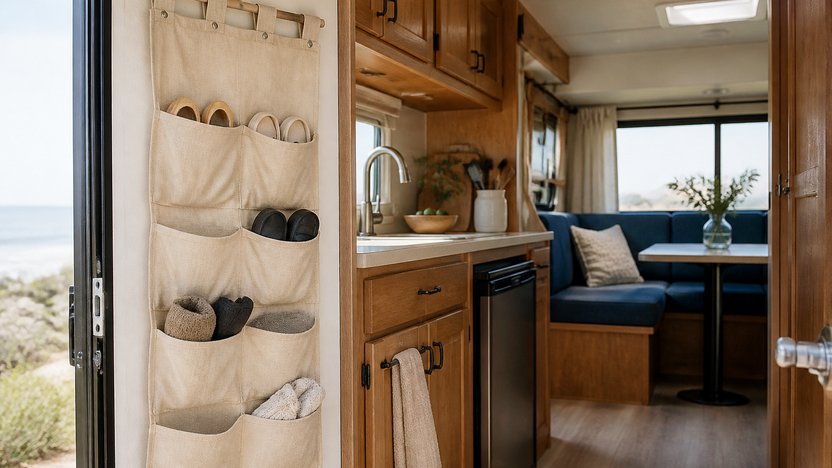
21 RV Storage Ideas Interior Spaces Need for a Calmer Getaway
Step through the RV doorway, and the first five seconds tell you plenty: shoes by the steps, a crowded counter, or a clear path to a comfortable seat. You want the last one, with your everyday things close but not constantly in sight. These RV Storage Ideas Interior solutions pair small compartments with hardworking details, from oatmeal canvas shoe pockets to divided kitchen drawers and tidy bedside pouches. There is room for a relaxed, personal style here, too. Think warm wood, clean surfaces, and a morning coffee that actually has somewhere to land.
1. Catch Entry Shoes in Canvas Pockets
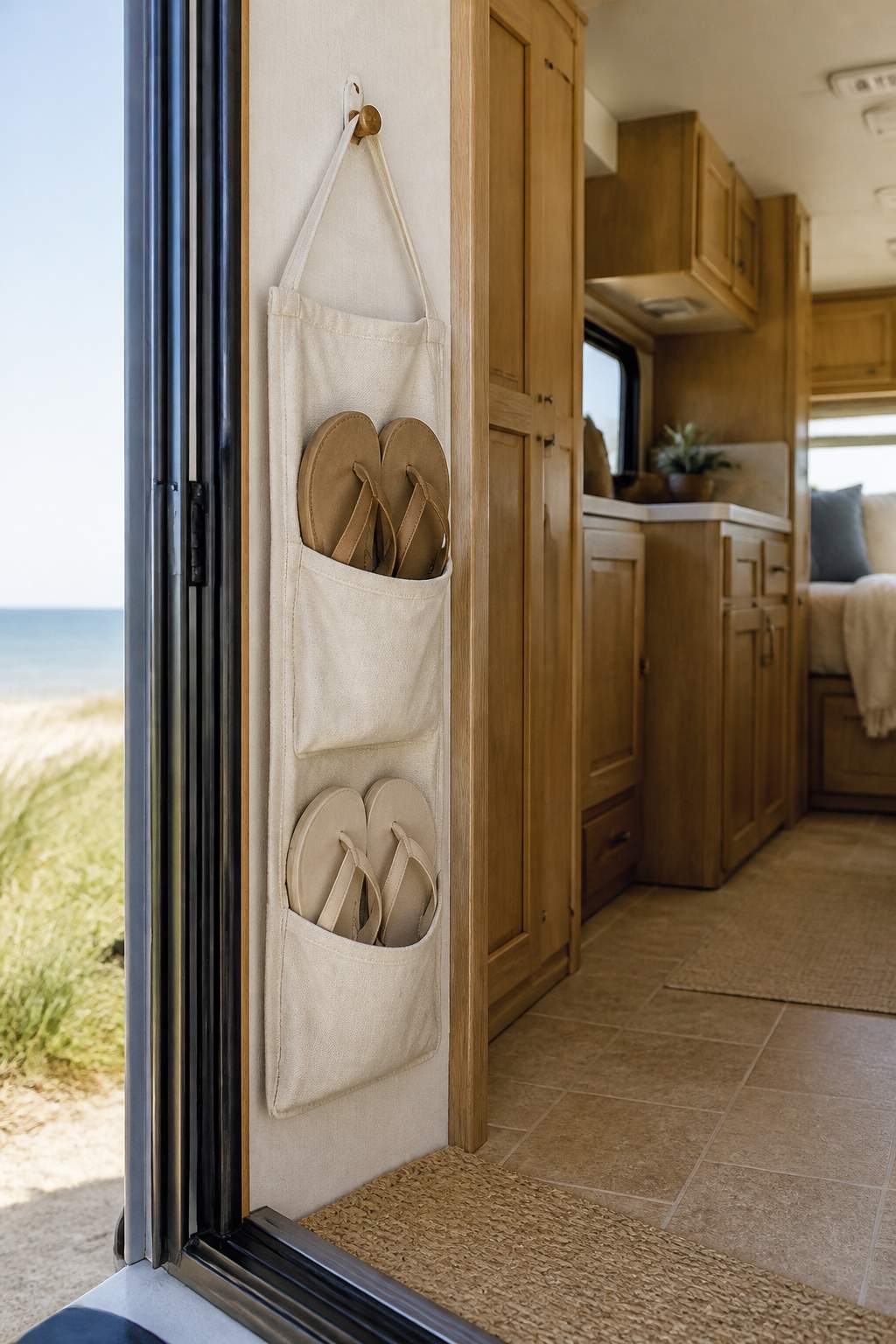
Oatmeal canvas pockets beside the entry gather sandals and slip-ons into one slim strip. Against warm wood cabinetry, the woven fabric reads casual and coastal, while the floor below stays open for stepping inside.
Measure your widest pair before choosing pockets. A pocket opening at least nine inches wide handles many adult sandals; test the loaded organizer with the entry door fully open before mounting.
2. Split Tall Cabinets With Shelf Risers
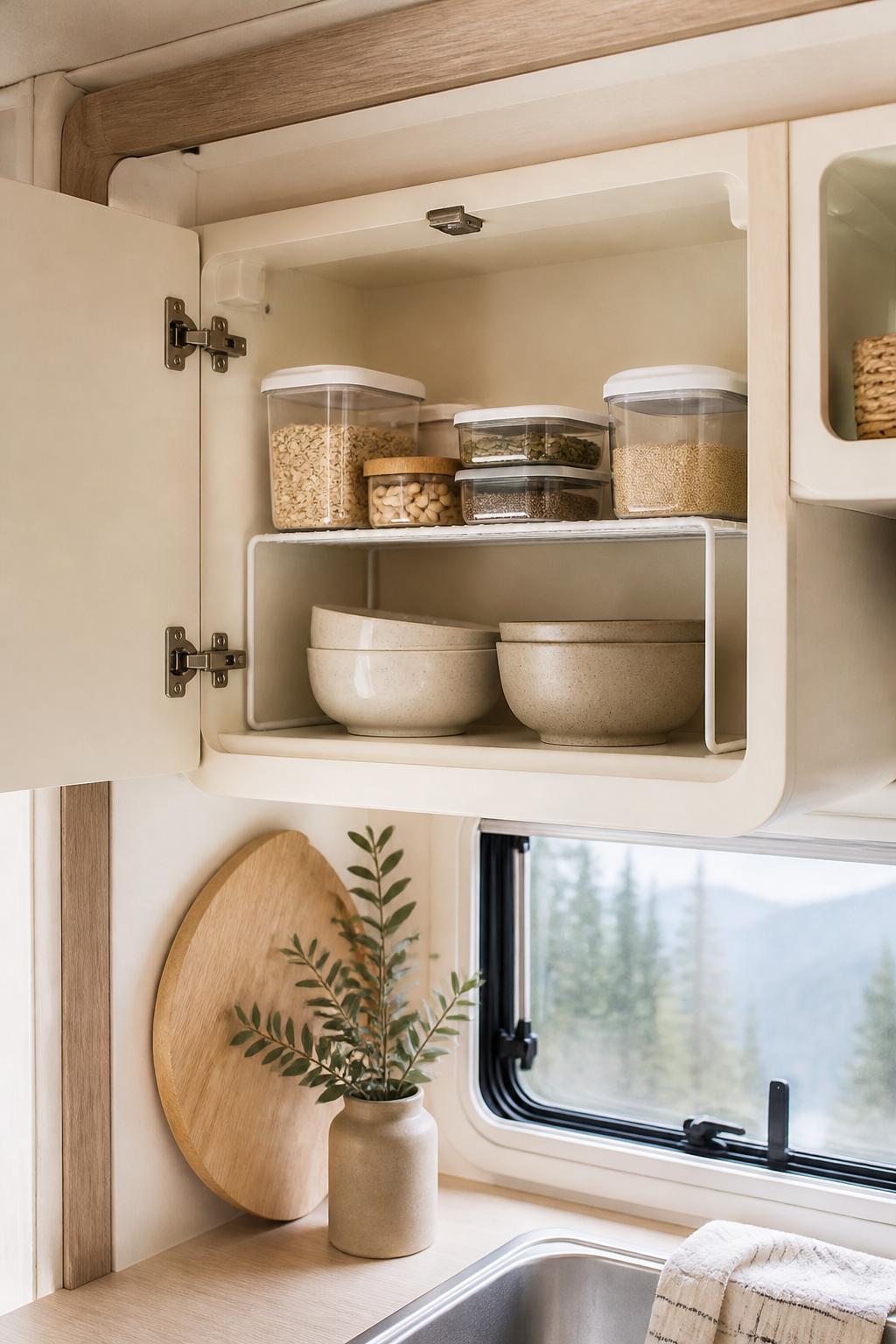
Inside a cream kitchen cabinet, a white wire riser separates bowls from short food containers. The extra tier uses the empty air above the dishes, with a crisp, orderly look that echoes Scandinavian kitchens.
Measure from the cabinet floor to its lowest hinge before buying a riser. Leave one inch above the tallest bowl so you can lift it out rather than drag it.
3. Divide Drawers Into Calm Little Zones
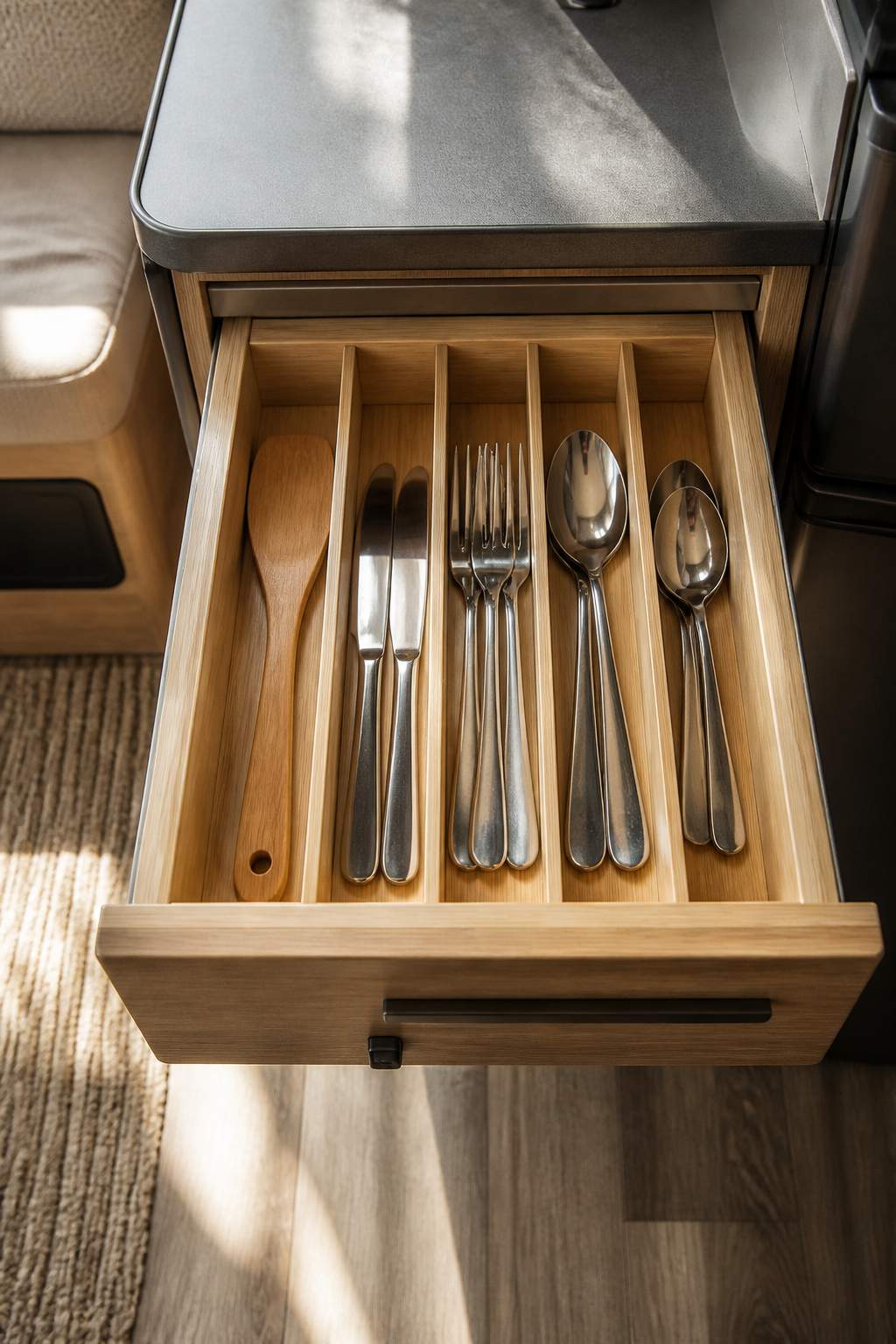
Bamboo dividers line up utensils in a shallow galley drawer, leaving a separate lane for the can opener. Honey tones warm the small kitchen, and nothing disappears beneath a jumble of spatulas and measuring spoons.
Measure the drawer’s inside width, depth, and height, not its front panel. Dividers should sit below the drawer sides so tall utensils cannot catch against the cabinet frame during closing.
4. Line Up Spices in Shallow Trays
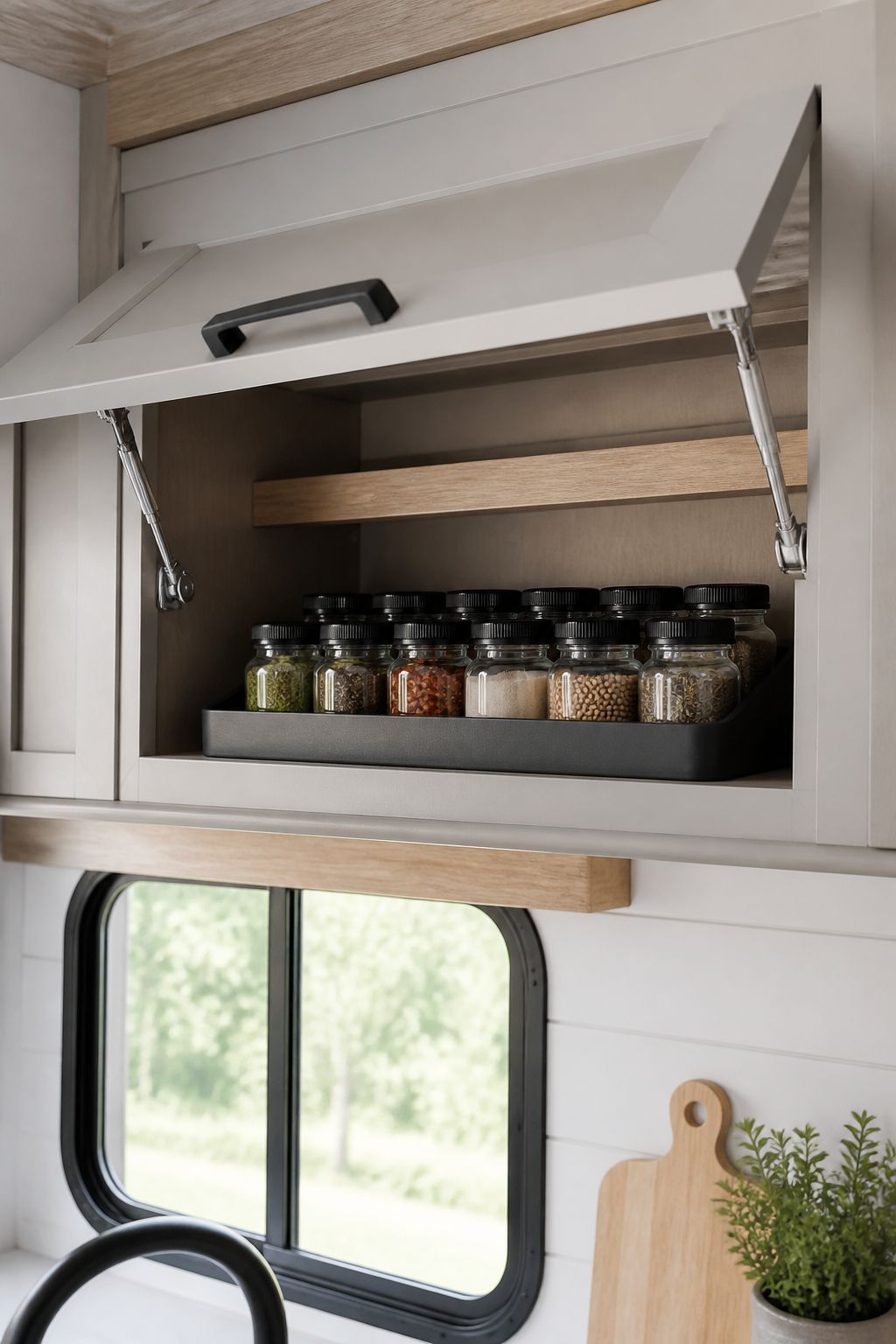
Matching short spice jars sit in a charcoal tray inside an upper cabinet, their lids visible at a glance. The dark tray outlines a tidy cooking zone against pale cabinetry, with none of the usual back-row mystery.
Choose a tray shallow enough to clear the cabinet’s front lip when lifted. Leave a finger-width gap beside it so you can grip the side with a full load inside.
5. Cradle Dinner Plates in Divided Slots
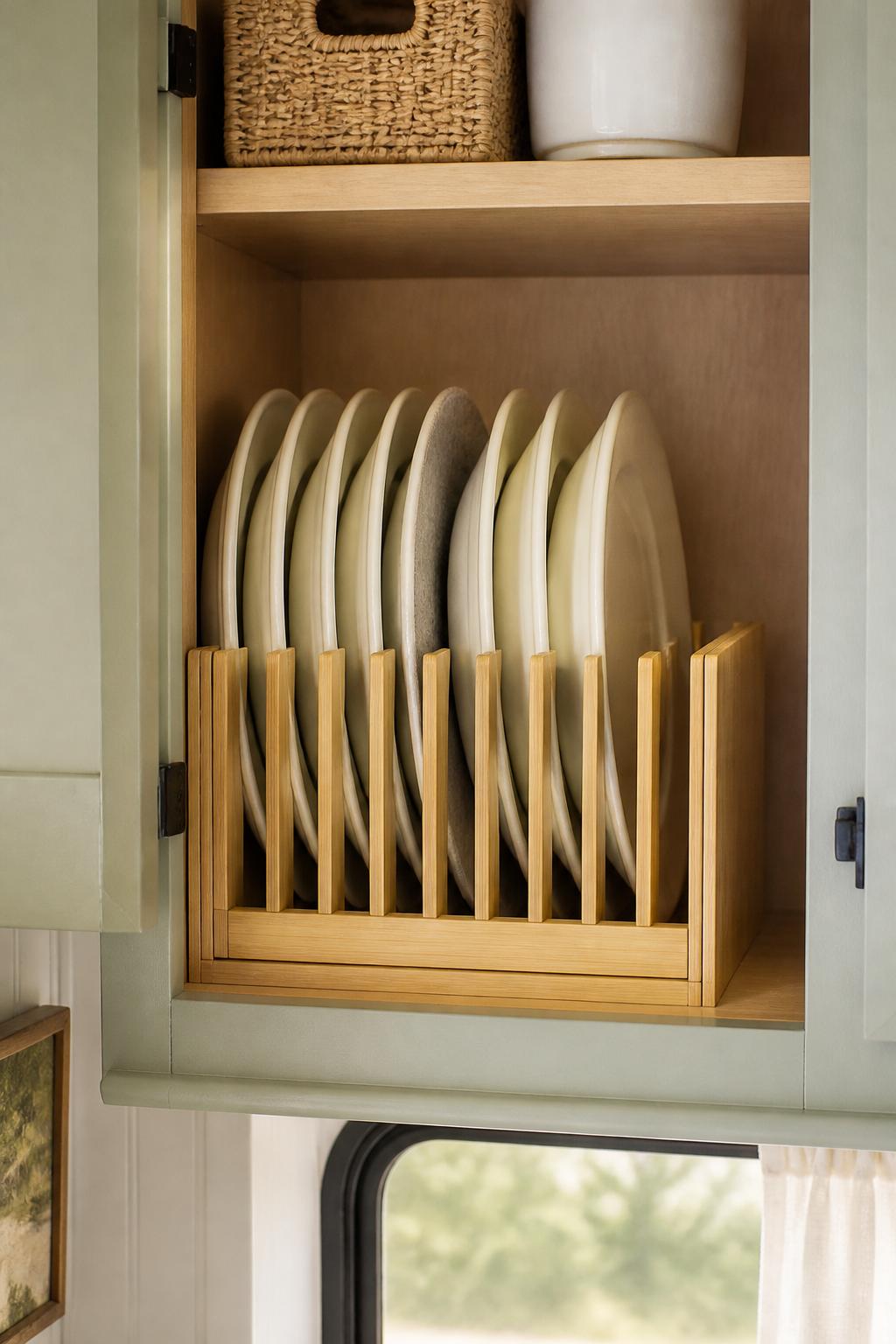
Cream plates stand upright in a compact bamboo plate holder, revealing their rims instead of forming a heavy stack. The slotted arrangement has a neat cottage kitchen look and leaves the cabinet’s remaining width easy to use.
Compare the plate diameter with the cabinet opening height before choosing this setup. Line the holder’s base with non-slip shelf liner, and place a felt separator between plates for travel.
6. Nest Mugs in a Padded Basket
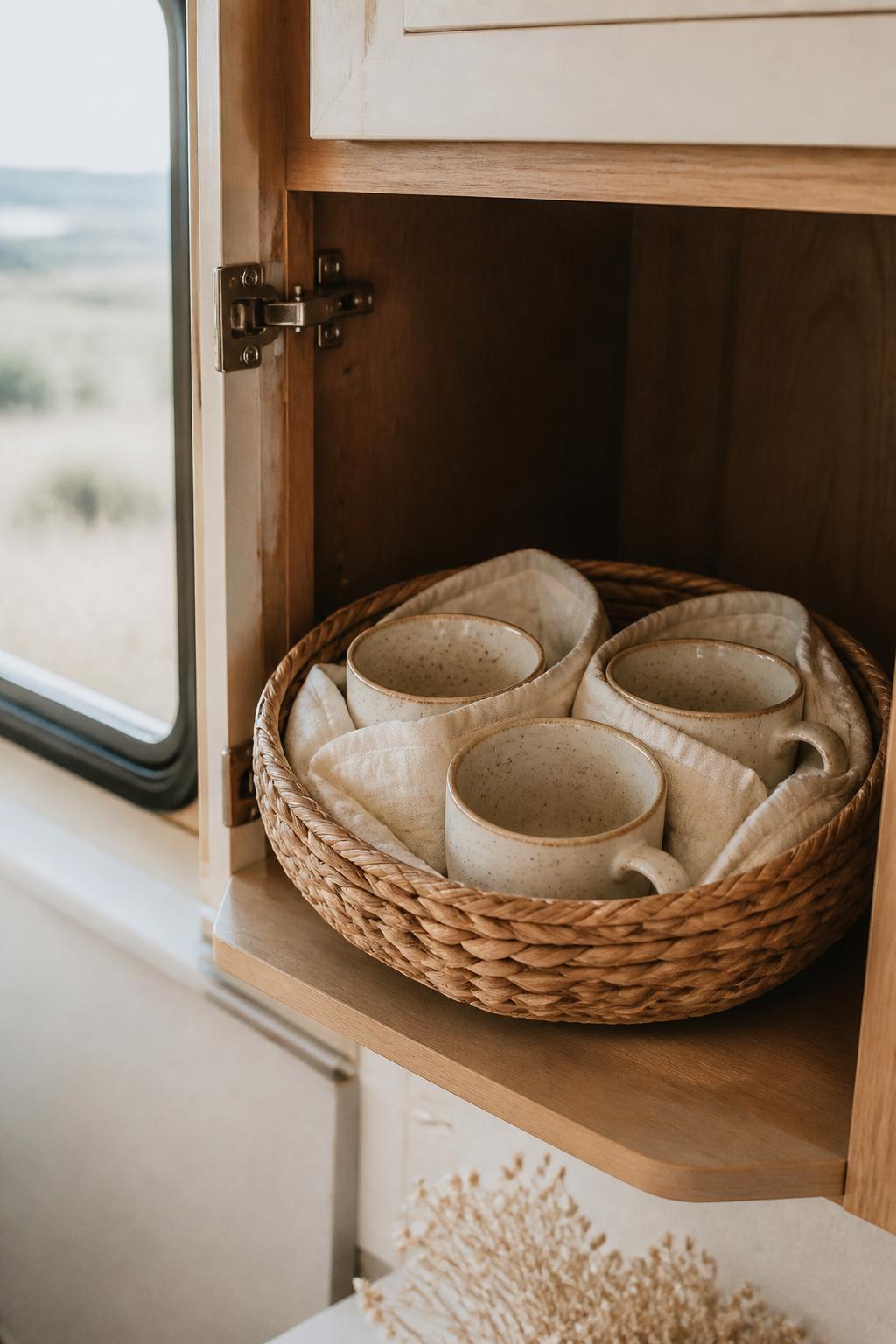
Speckled mugs nest in a low woven basket lined with quilted cotton. Tucked into a cabinet beside the coffee supplies, the basket blends earthy texture with a clearly defined place for the morning routine.
Use fabric dividers between mugs rather than relying on the basket alone. Measure the tallest mug with its base padding included so the basket clears the shelf above when pulled forward.
7. Hang Laundry in a Slim Hamper
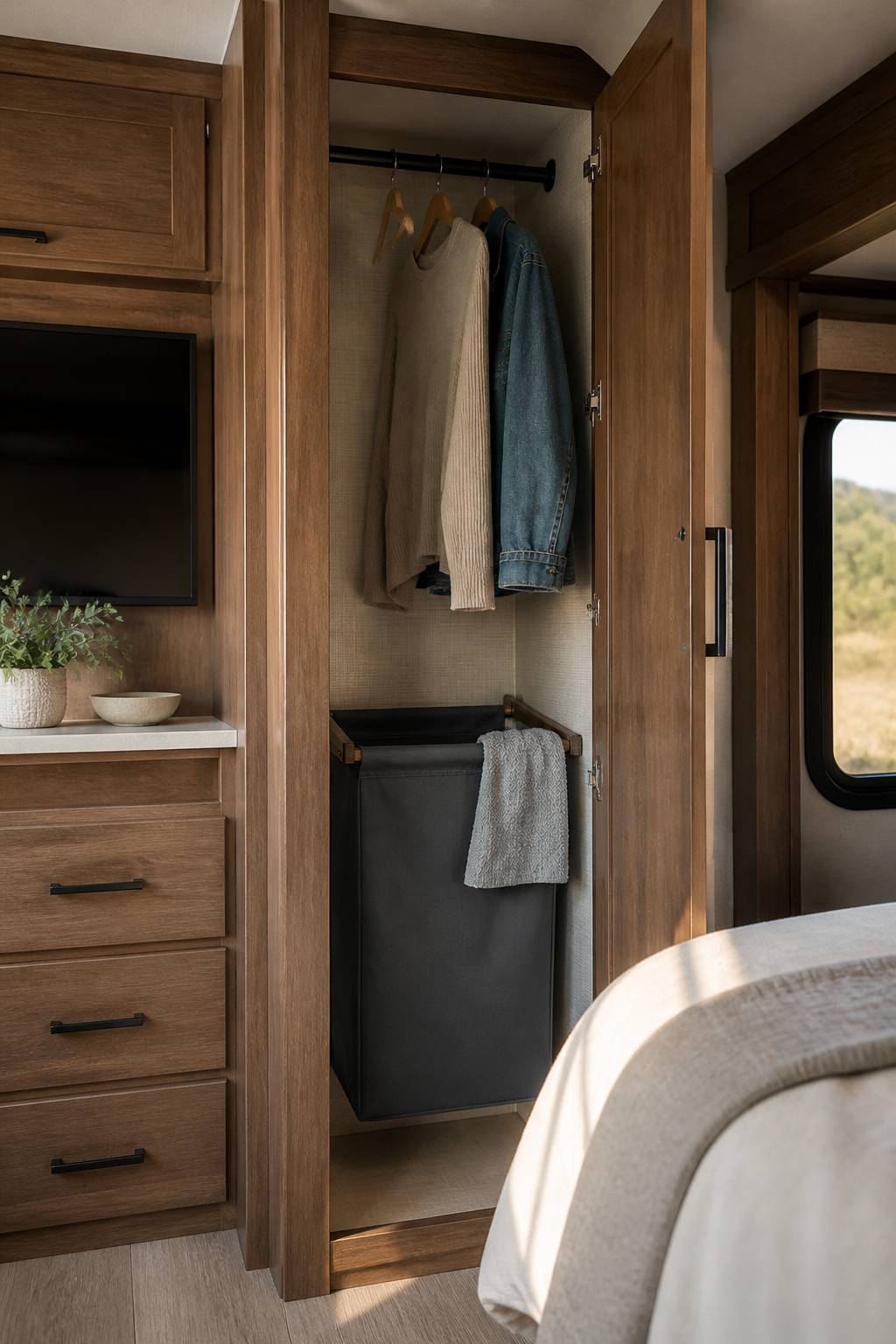
A narrow canvas laundry bag hangs inside the bedroom wardrobe, replacing the bulky hamper that usually claims floor space. Its charcoal fabric disappears against dark cabinetry, leaving the sleeping area visually quiet and easy to walk through.
An over-door hamper needs clearance above the wardrobe door as well as behind it. Test the empty hanger first; the door should close fully before you load clothing into the bag.
8. Slide Seasonal Bedding Beneath the Bed
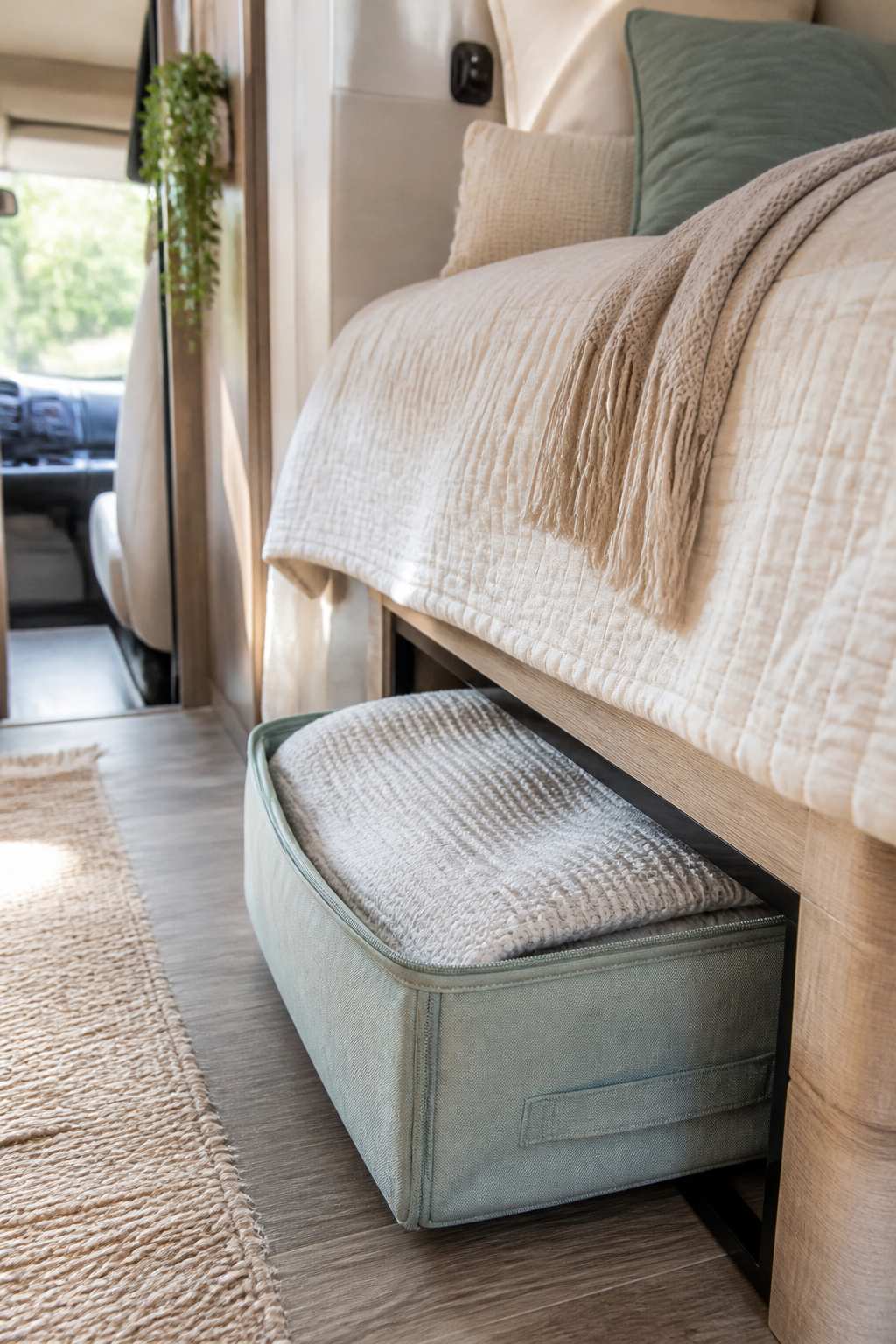
Flat zippered fabric bins tuck extra blankets beneath the bed, with their handles facing the aisle. Muted sage sides and cream bedding create a gentle country palette, while bulky seasonal layers disappear from the wardrobe.
Check clearance at the bed frame’s lowest crossbar, not just its edge. Choose bins one inch shorter than that measurement, and leave ventilation grilles and access panels completely uncovered beneath the mattress.
9. Sort Dinette Compartments With Lift-Out Bins
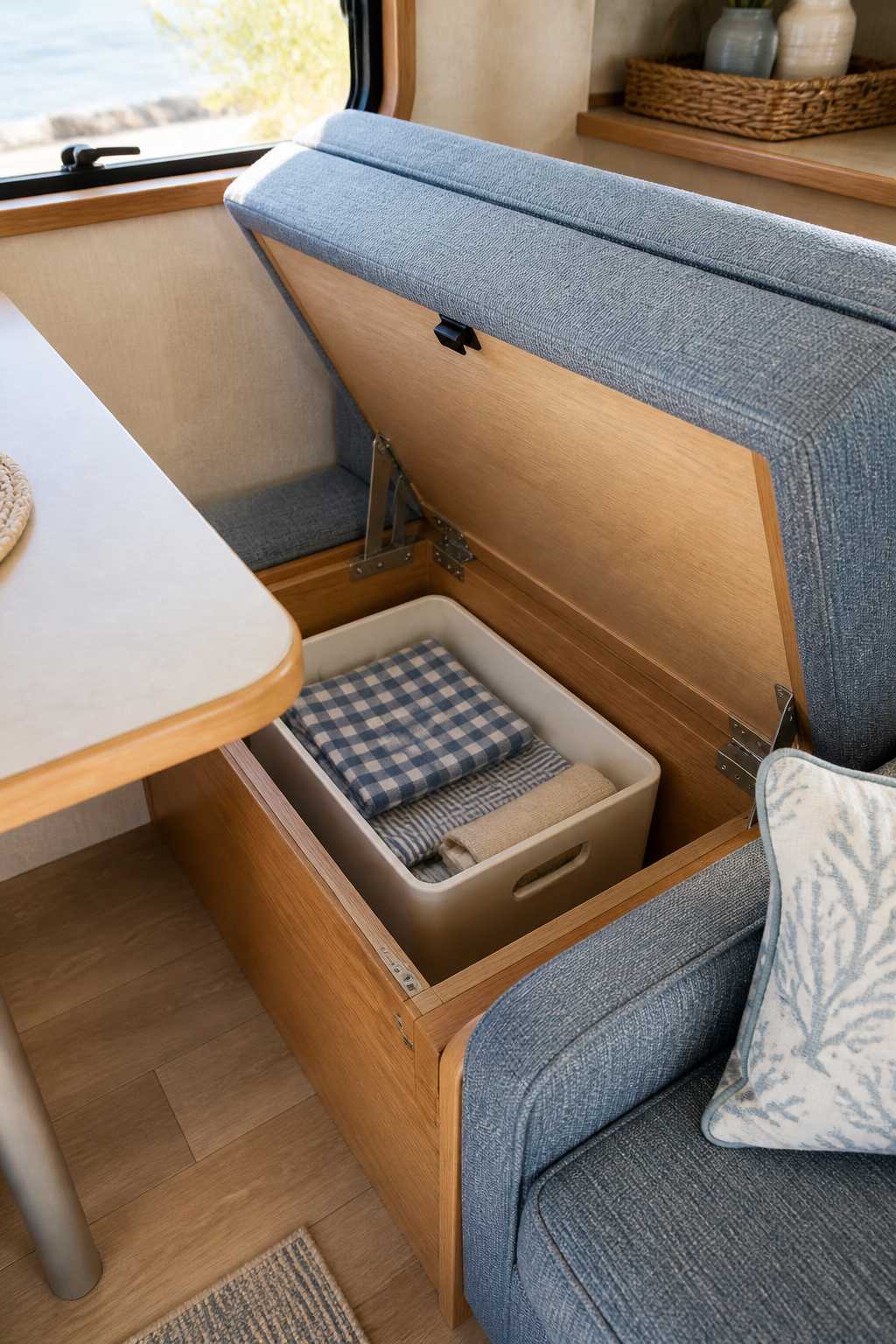
Under the dinette seat, handled bins separate games, picnic linens, and spare supplies. White bins against the wood compartment look clean rather than crowded, and the upholstered seat closes over everything when dinner is ready.
Measure the hatch opening before the compartment itself. A bin may fit inside yet refuse to pass through the opening, especially when the seat hinge limits how far the lid lifts.
10. Contain Bunk Extras With Mesh Nets
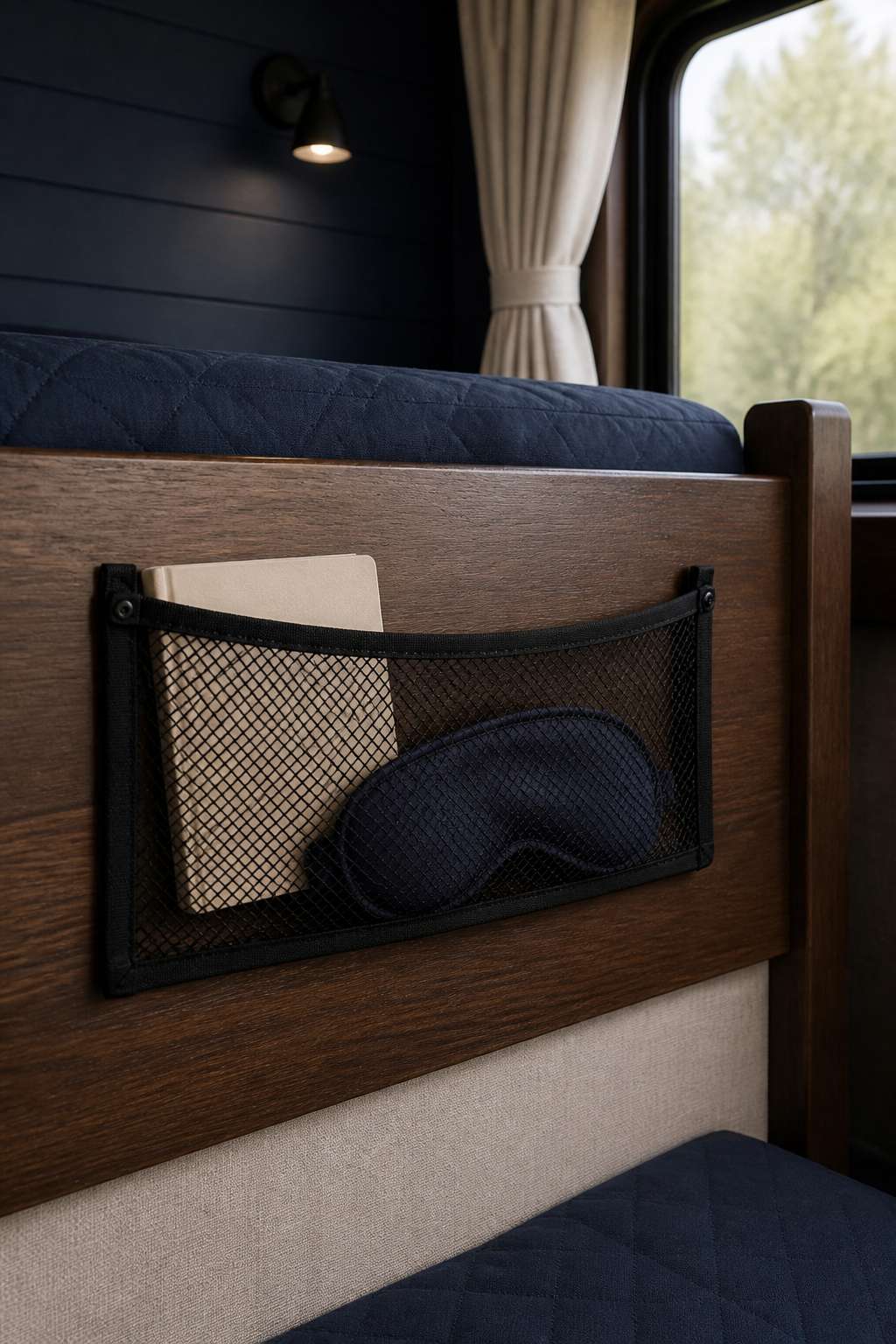
A small mesh storage net stretches along the bunk wall, holding a paperback and folded sleep mask. The black mesh nearly disappears against navy paneling, giving the sleeping nook a tidy, cabin-inspired edge with essentials close by.
Choose a net with a solid lower edge so small items cannot slip through. Mount it to the bunk’s solid wood rail, using screws shorter than the rail’s measured thickness.
11. Carry Toiletries in a Draining Caddy
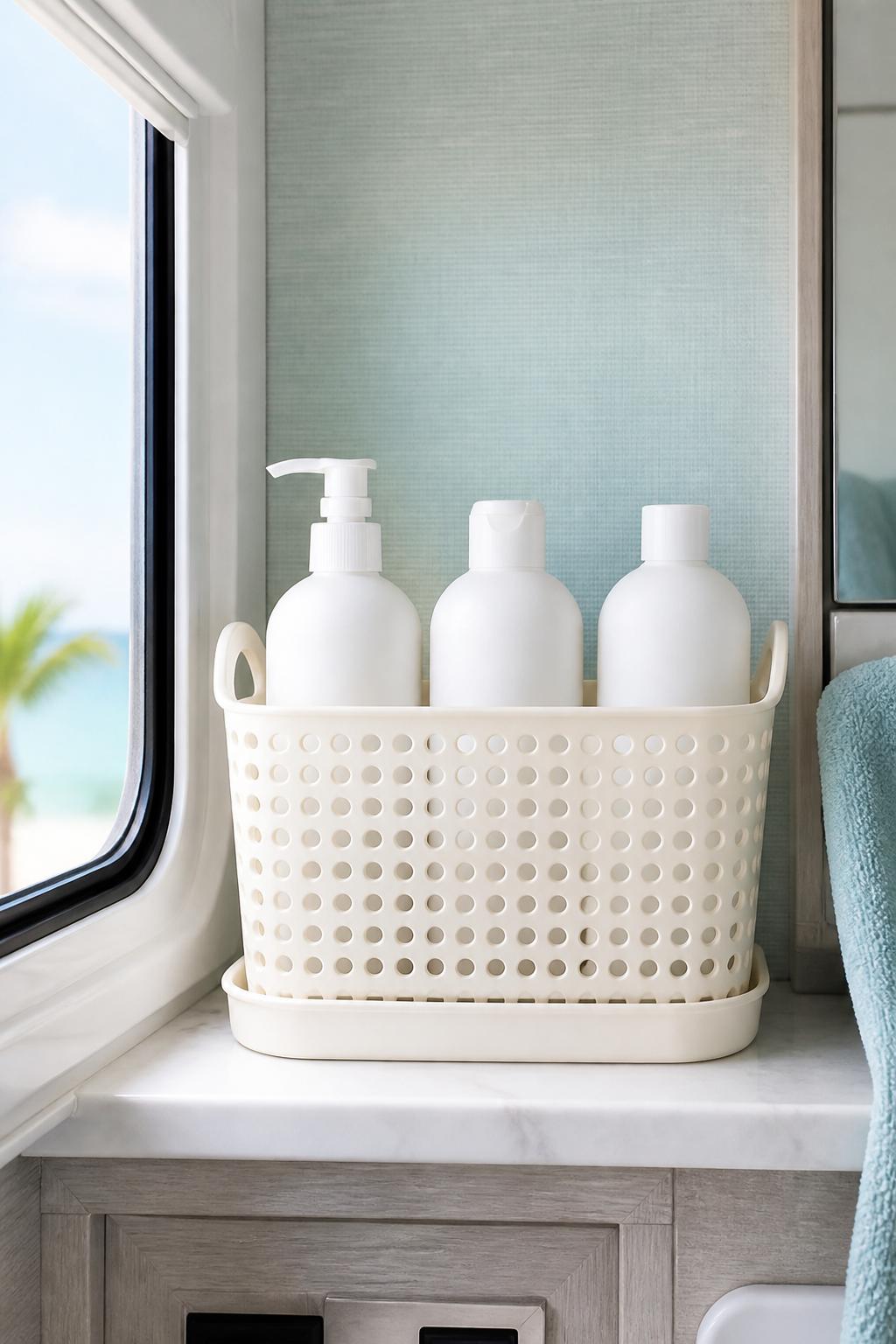
An ivory handled caddy corrals shampoo, soap, and face wash on the bathroom shelf. Its perforated sides and simple shape echo a clean coastal bathroom, replacing scattered bottles with one compact bundle you can lift.
Select a caddy with drain holes in its base, not only its sides. Set it on a removable drip tray inside the cabinet after the bottles have stopped dripping from use.
12. Stack Towel Hooks Behind the Door
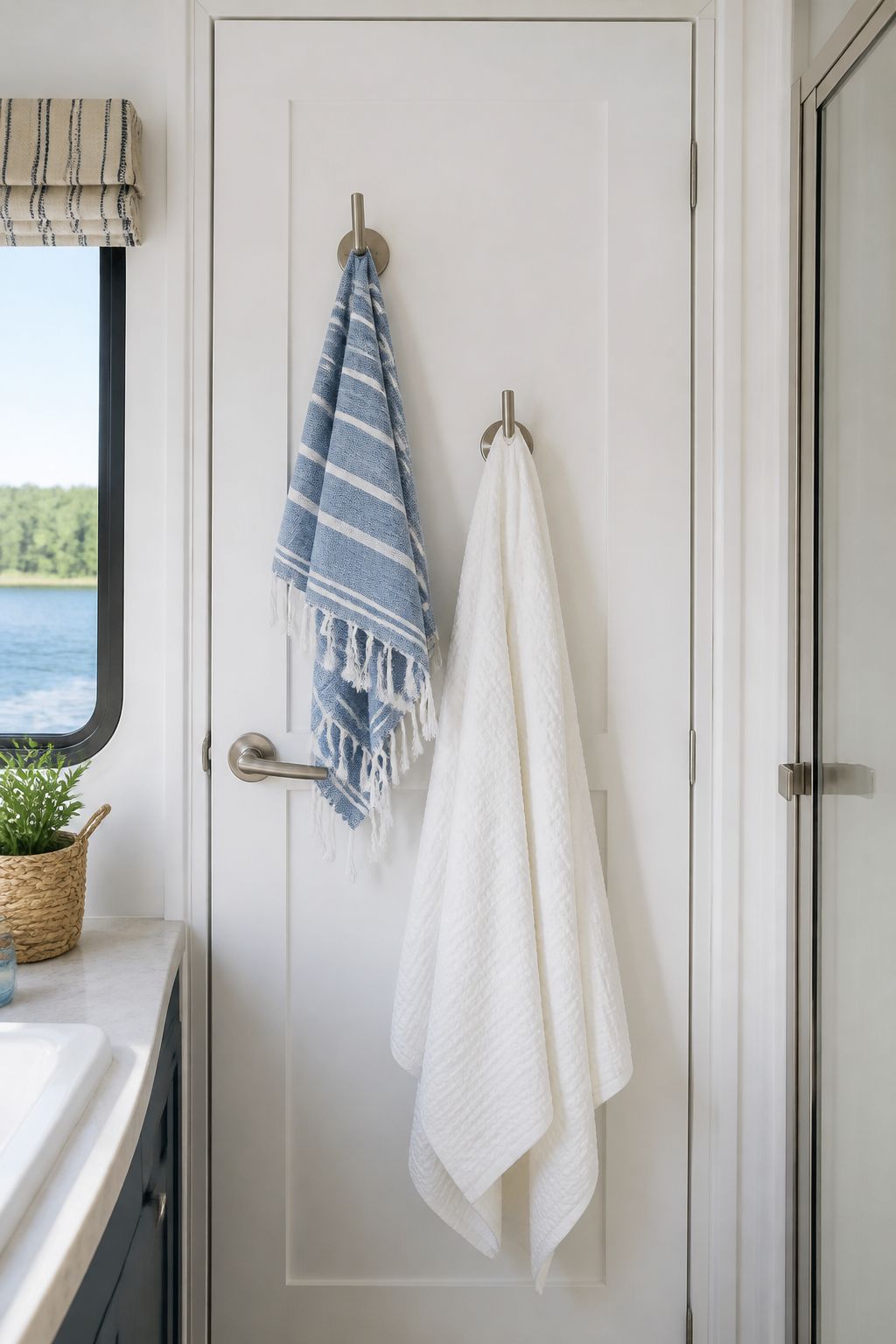
Brushed nickel hooks line the back of the bathroom door, with a striped hand towel hanging above a waffle bath towel. The narrow arrangement uses an overlooked surface and introduces texture to the compact white room.
Hang the lower hook so the bath towel ends at least two inches above the floor. Offset the upper hook sideways to prevent the hand towel from overlapping the towel below.
13. Tuck Spare Rolls Into a Canister
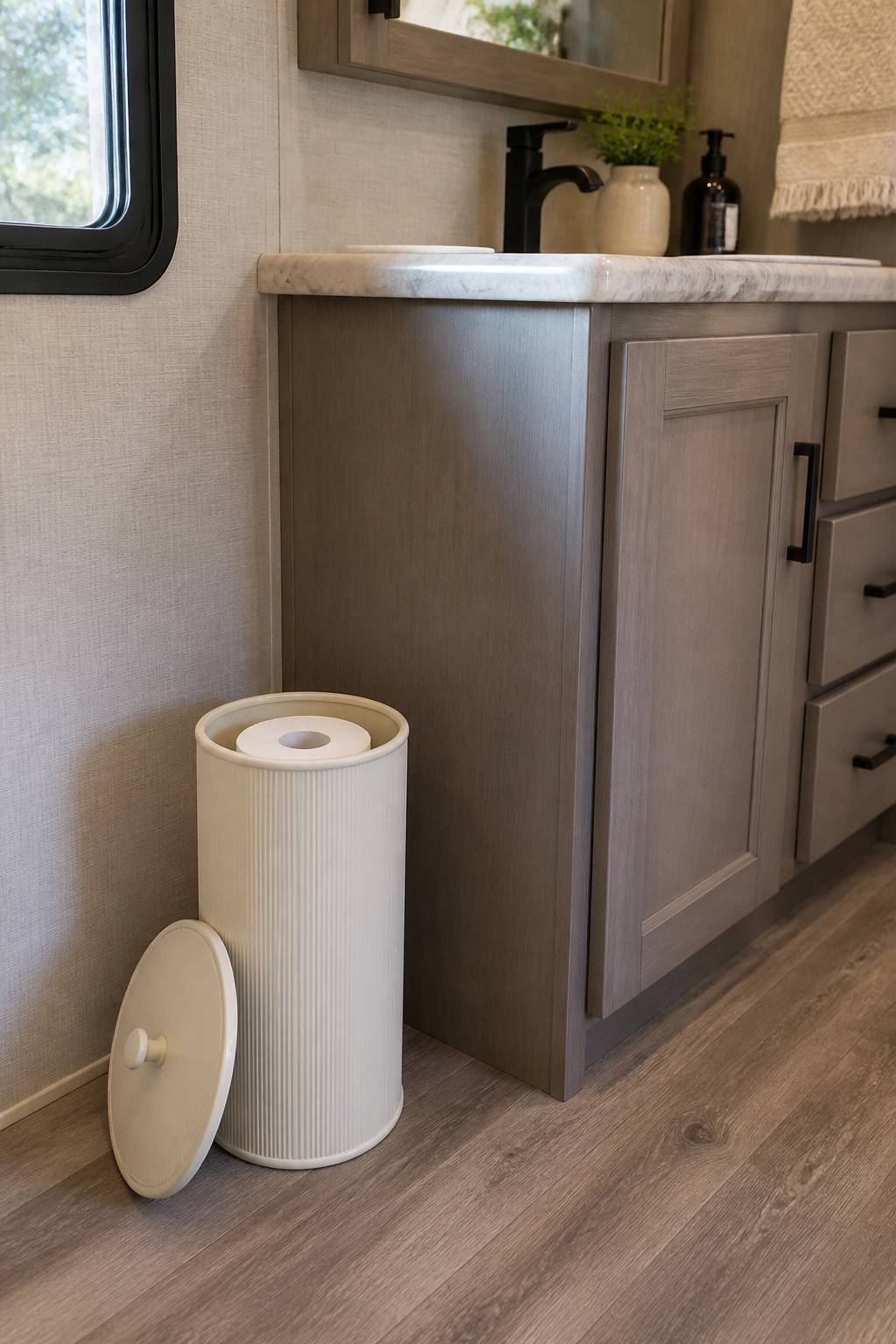
A lidded ivory canister holds spare toilet paper beside the bathroom vanity. The narrow cylinder looks more settled than loose packaging, and its matte finish balances the shine of the faucet in a small contemporary bathroom.
Measure the diameter of your usual rolls before selecting the canister. Allow half an inch of extra interior width so a full roll slides out instead of wedging against the sides.
14. Park Remotes in an Armrest Pocket
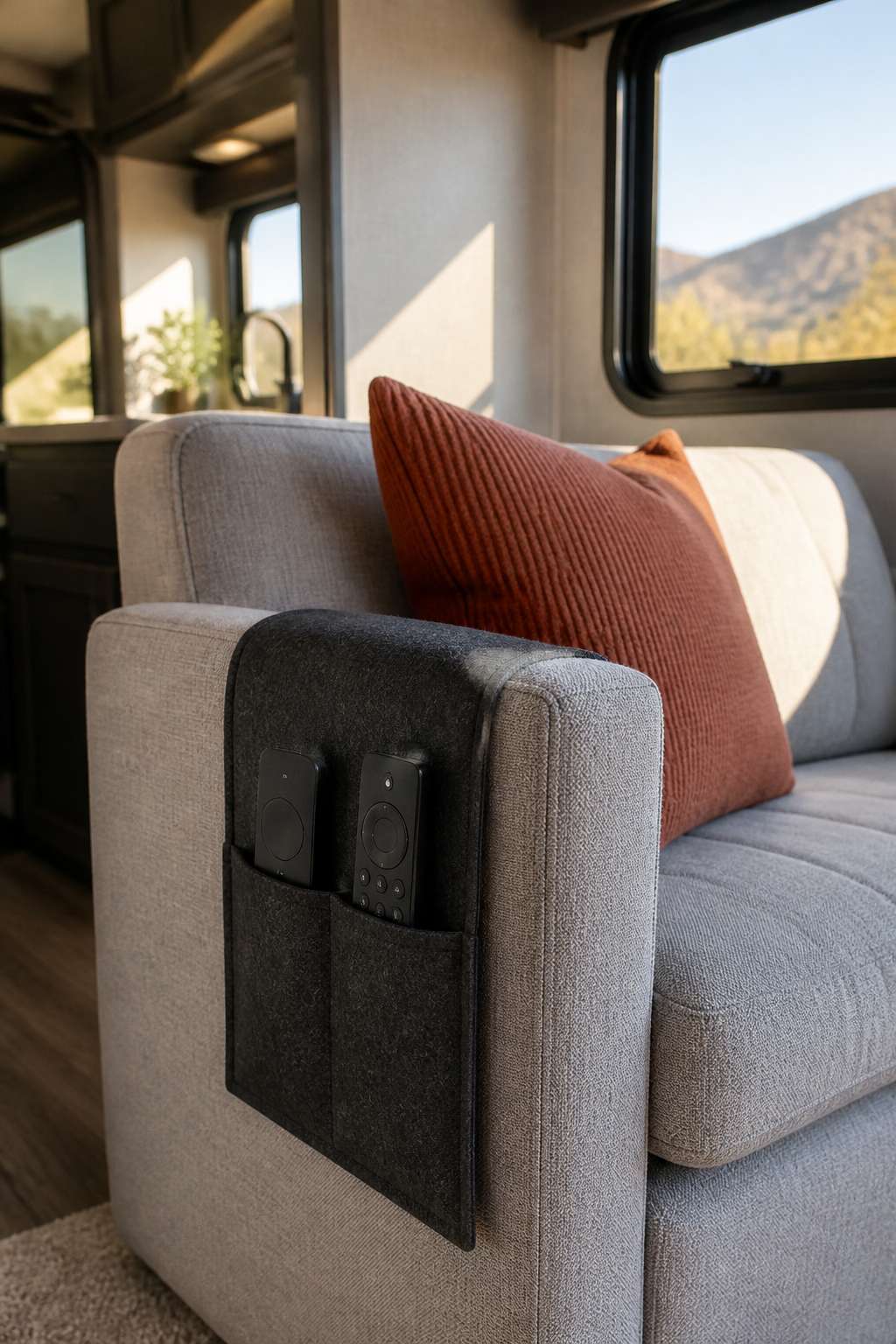
A slate felt organizer drapes over the sofa arm, with remotes upright in separate pockets. The nubby surface blends with gray upholstery, replacing the familiar search between cushions with one visible landing place near your seat.
The organizer’s anchor flap should extend beneath the seat cushion, not rest only on the arm. Test the flap length while seated because compressed cushions can pull a short organizer loose.
15. File Travel Papers Beside the Desk
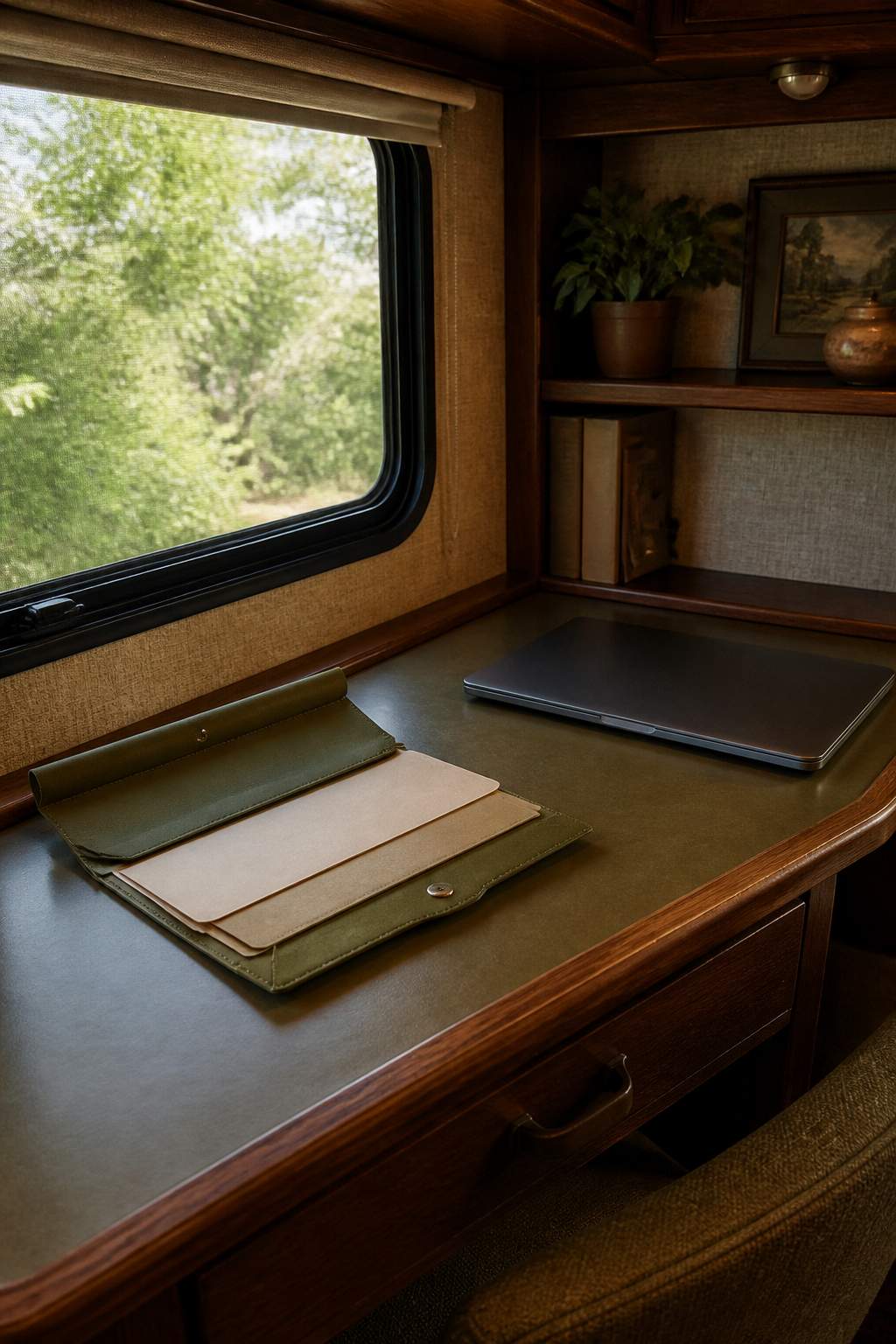
A slim olive document file stands beside the laptop nook, holding campground papers and maps upright. Its muted color blends with walnut trim, giving the compact workspace an old-school study mood rather than a pile-of-mail look.
A file with a closed back stops loose pages from curling behind the desk. Use separate plain folders for vehicle documents and trip papers so small receipts cannot slide between larger sheets.
16. Arrange Sweaters in Hanging Wardrobe Cubbies
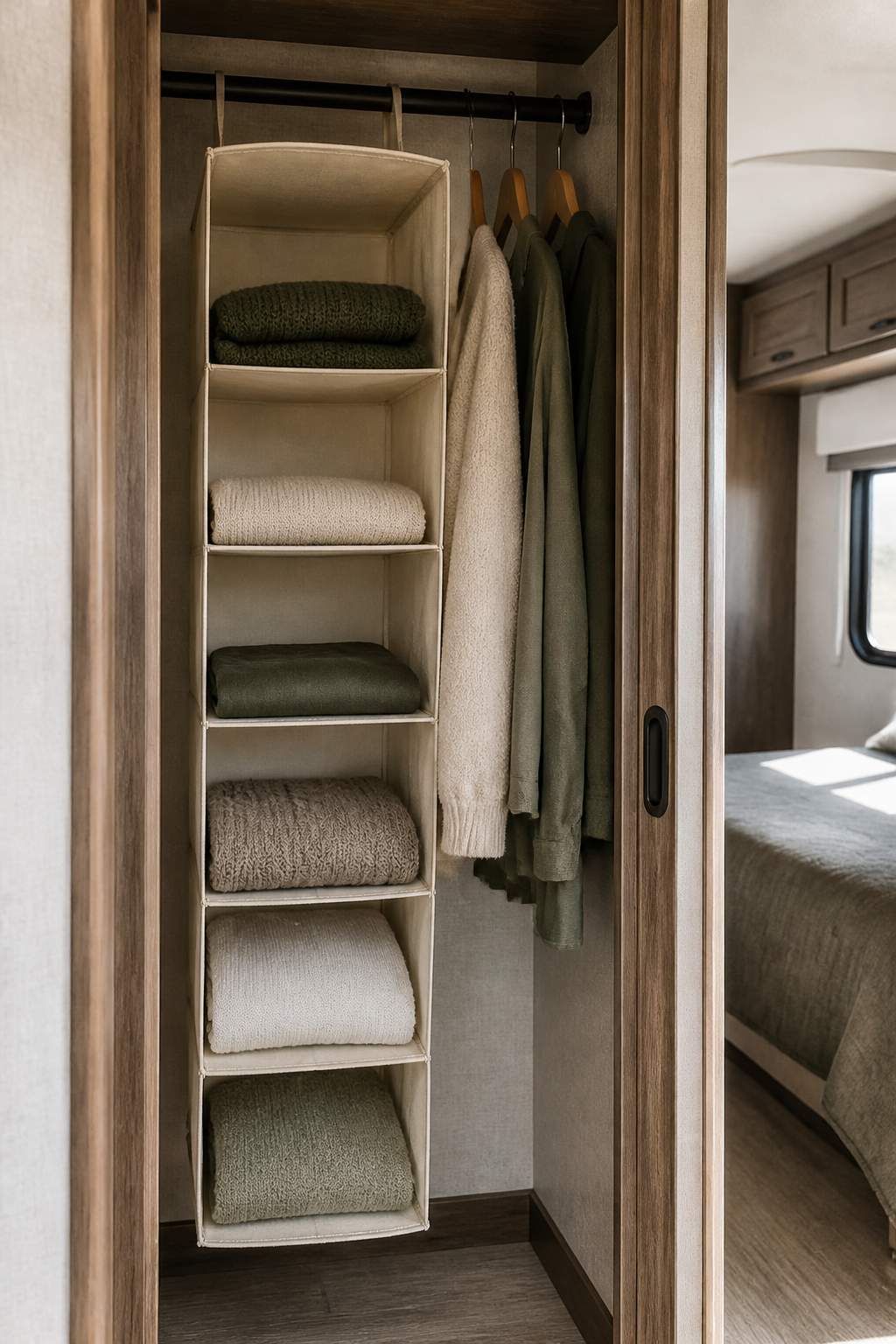
Cream fabric cubbies hang from the wardrobe rod, stacking folded sweaters in tidy horizontal rows. The pale fabric lightens a dark closet interior, while each open compartment shows exactly which layer is ready for a chilly evening.
Measure the drop from the closet rod to the floor before ordering. Leave the bottom cubby clear of the floor, and store heavier knits in lower compartments to reduce sagging.
17. Hide a Waste Bin Underneath the Sink
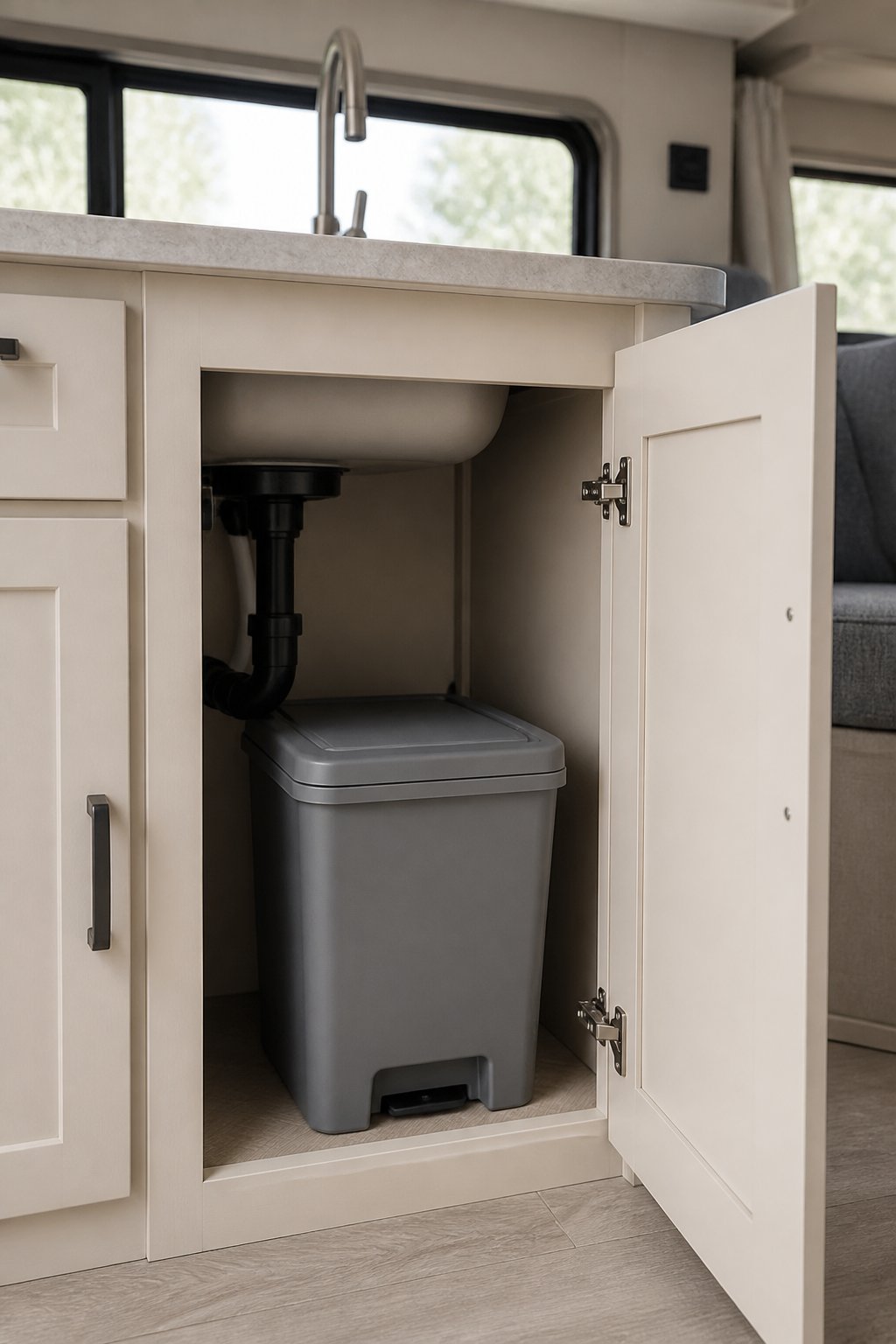
A compact rectangular waste bin occupies one side of the under-sink cabinet, leaving the kitchen aisle clear. Its muted gray finish blends into the shadows, while a fitted lid conceals the everyday clutter of food wrappers.
Trace the drainpipe’s position on paper before choosing a bin. Check the lid’s open height, too; a container that slides beneath the plumbing may still need to come out for loading.
18. Clip Cleaning Tools Inside a Cabinet
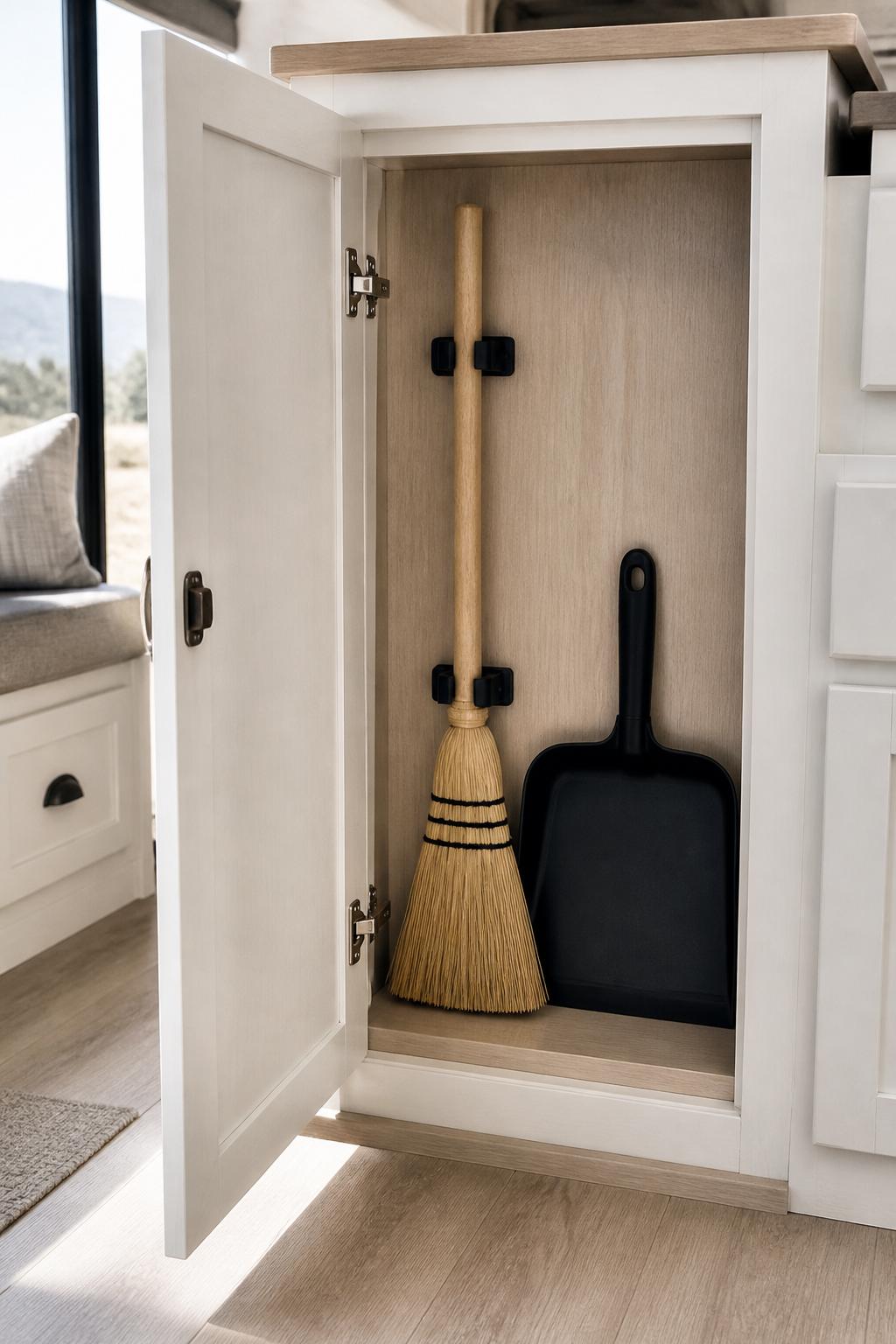
A short broom and dustpan hang upright inside a utility cabinet, held by small rubber-grip clips. Their pale wood and black finishes look orderly against white cabinetry, with the cabinet floor available for a folded cleaning cloth.
Match each clip’s grip range to the actual handle diameter. Position the broom so its bristles hang one inch above the cabinet floor rather than bending under the tool’s weight.
19. Bundle Charging Cords in Zippered Pouches
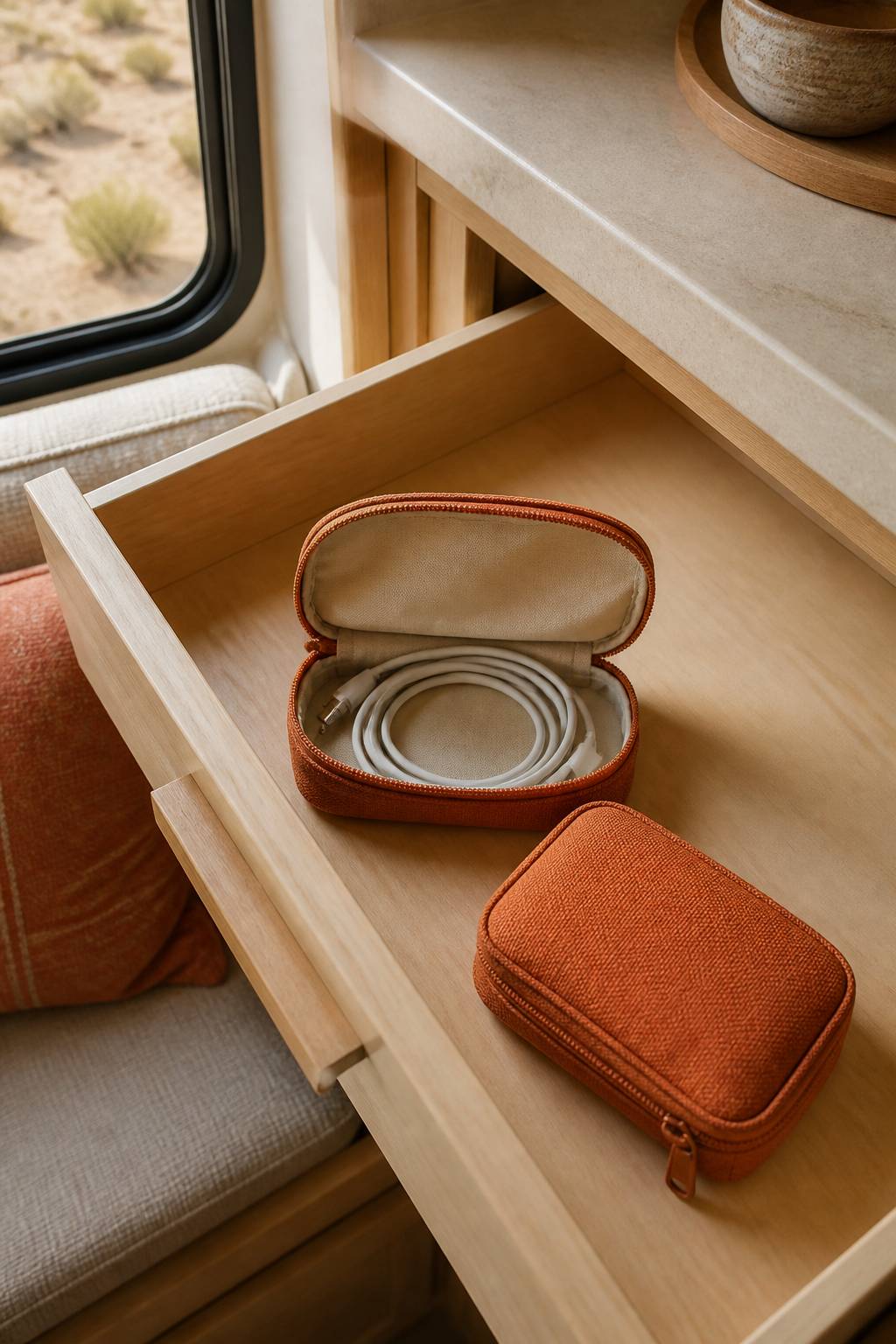
Small rust-colored zippered pouches collect charging cables in a narrow drawer, one pouch per device group. The fabric introduces a warm accent to the tech stash, and tangled cords no longer spill across the dinette table.
Coil each cable into a loose loop about three inches across before placing it inside. A pouch with a flat base sits more neatly in shallow drawers than a rounded cosmetic bag.
20. Contain Pet Food in a Narrow Bin
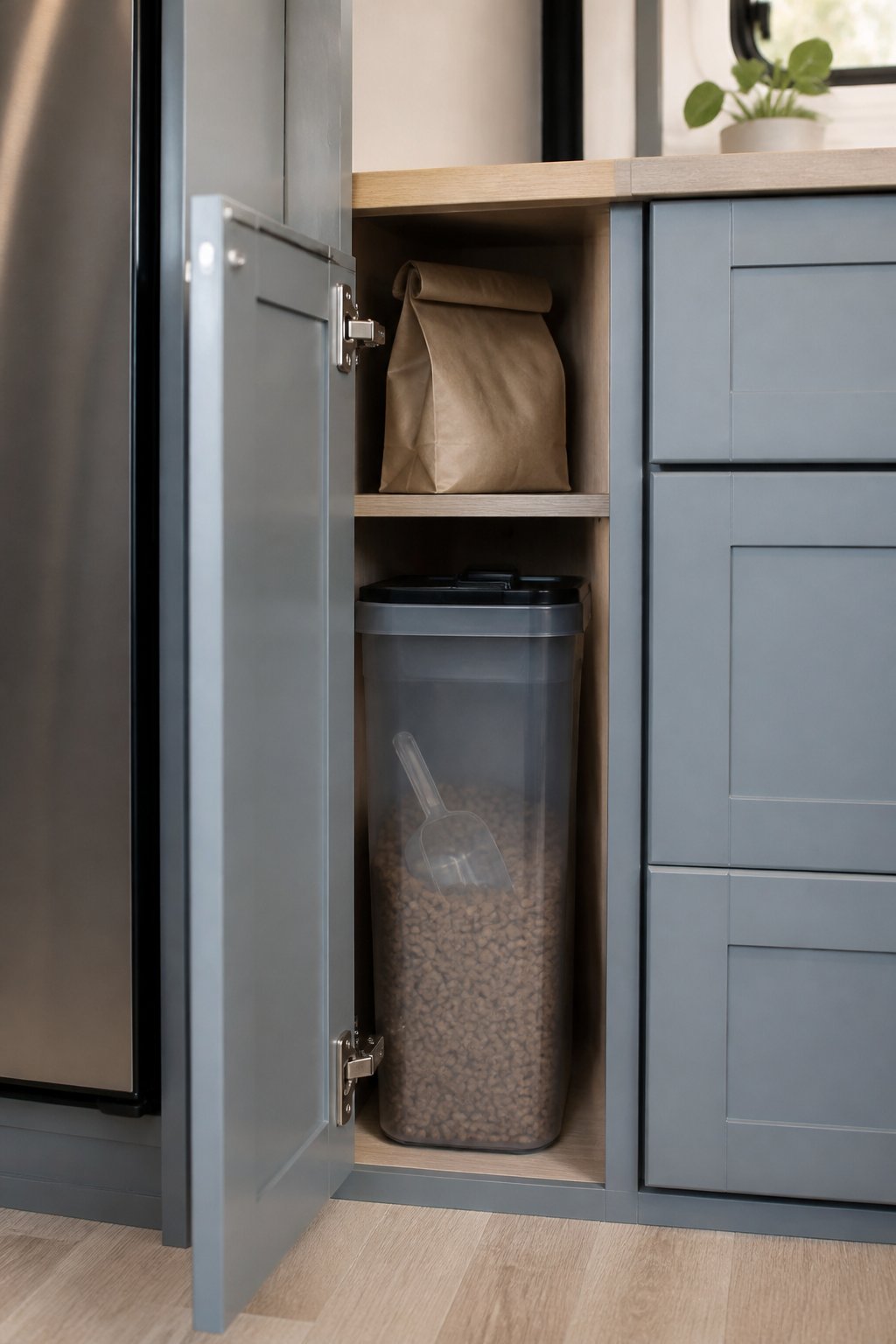
A tall, narrow food bin slips into the lower pantry, with a scoop tucked beside the original kibble bag inside. The smoky translucent finish reveals the remaining supply while keeping pet supplies separate from your breakfast staples.
Choose a bin wide enough to hold the original food bag upright. Measure the pantry opening with its hinges included, and leave space above the lid for your hand to lift it.
21. Slot a Folding Table Beside Seating
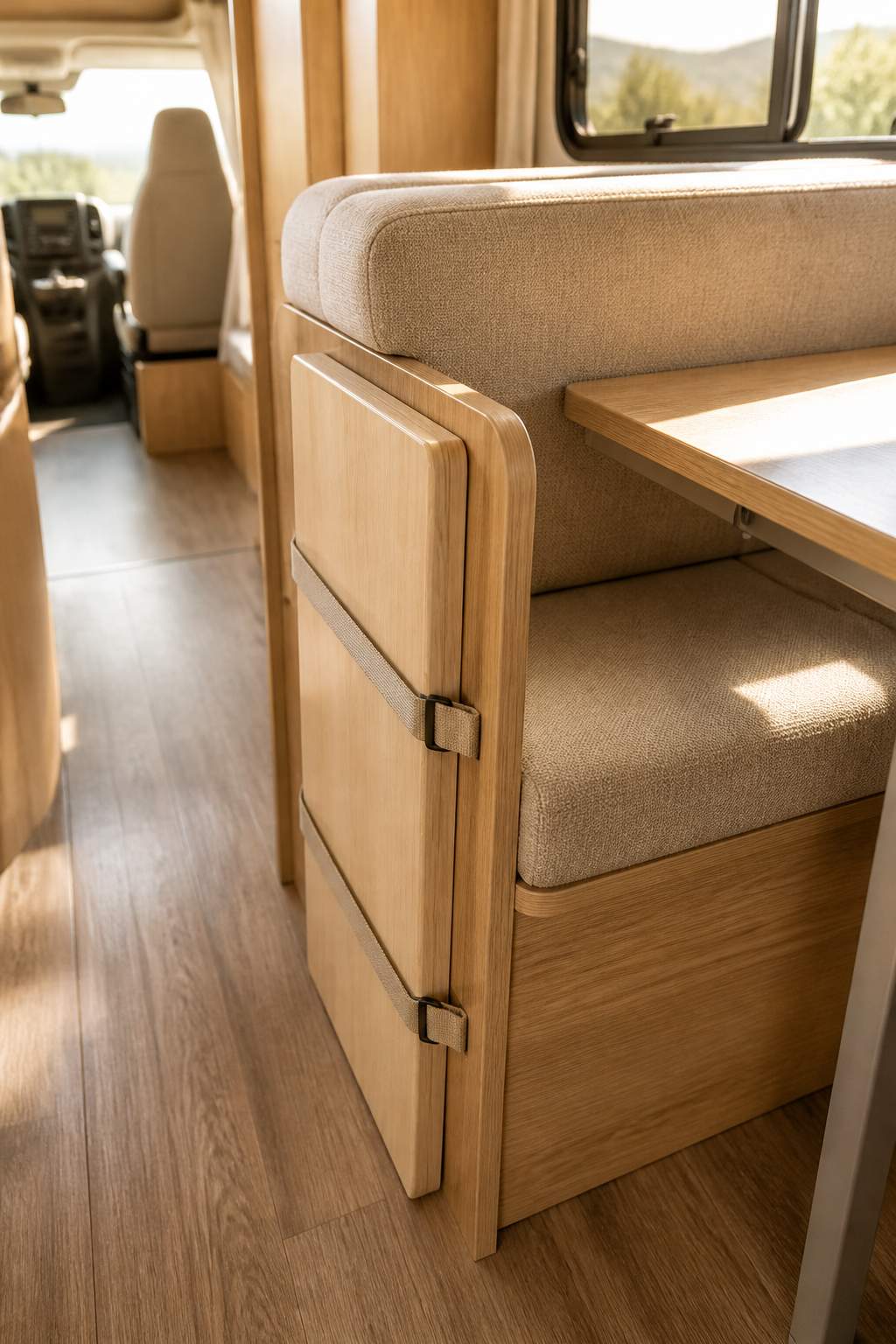
A slim folding table rests in the gap beside the dinette, its pale wood top facing outward. The flat profile blends with the surrounding cabinetry, ready for a puzzle night or an extra breakfast surface when parked.
Measure the table’s folded thickness at its hinge, usually the bulkiest point. Two webbing straps around the table and a solid dinette support prevent it from sliding out of its slot.