
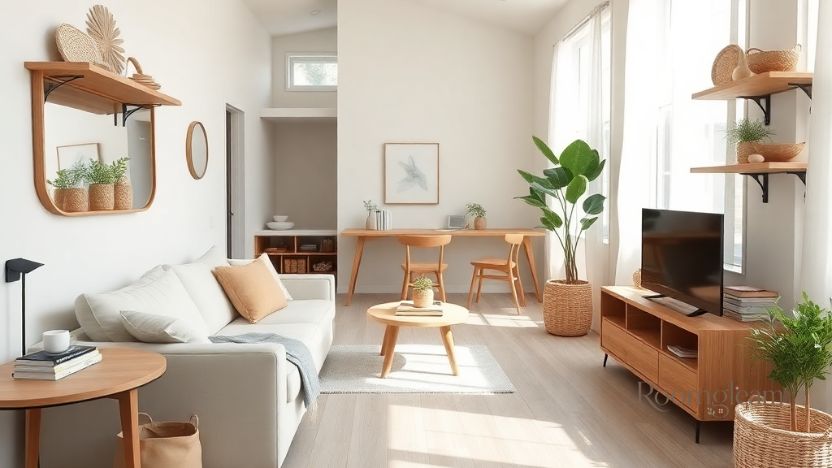
18 Tiny Home Decor Ideas to Make Small Spaces Feel Stylish
Decorating a tiny home is less about adding more furniture and more about making every choice feel intentional. With thoughtful planning, even a compact layout can become bright, stylish, and easy to live in. The right colors can open the room, multifunctional pieces can reduce clutter, smart storage can hide daily essentials, and intentional styling can make everything feel calm and inviting.
Whether you live in an apartment, studio, tiny house, or have a compact room to refresh, these 18 tiny home decor ideas offer practical inspiration for creating a space that feels beautifully spacious.
1. Choose Light and Neutral Colors
Light, neutral colors bounce daylight around a room, helping walls feel farther apart and ceilings feel higher. They soften edges and create an airy backdrop that makes compact spaces feel calmer and more open.
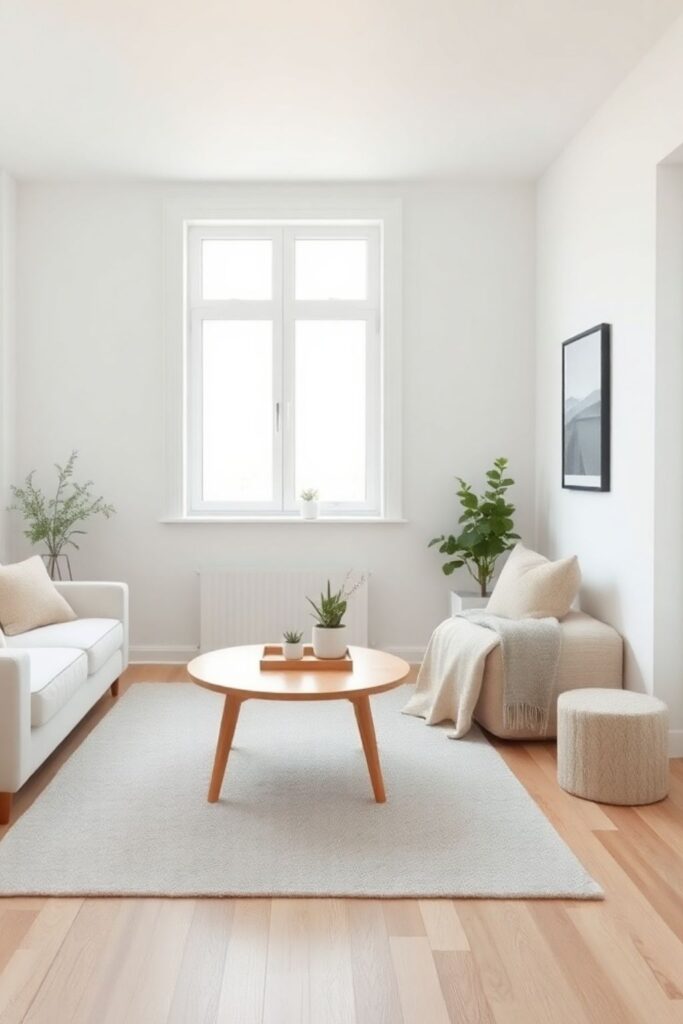
Use whites, creams, soft grays, warm beige, or pale sage on walls, furniture, and textiles. Add contrast with natural wood tones or slim black accents.
2. Use Multifunctional Furniture
Multifunctional furniture is essential because every piece needs to earn its place. In a tiny home, flexible designs reduce clutter, support daily routines, and prevent rooms from feeling crowded with single-purpose items.
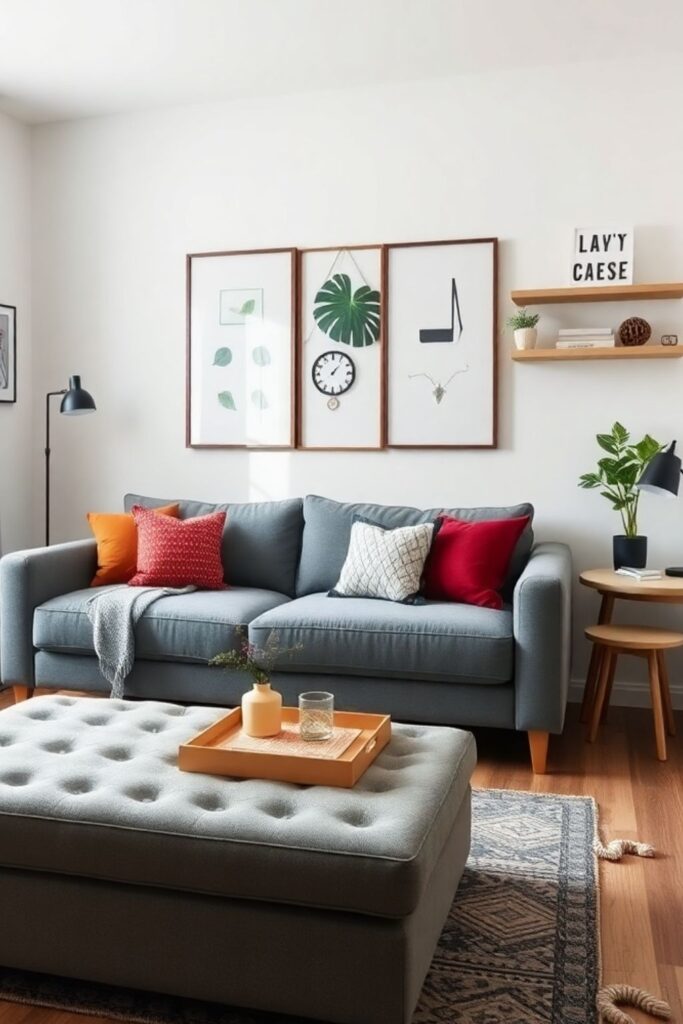
Choose storage ottomans, sofa beds, nesting tables, lift-top coffee tables, or beds with built-in drawers. These pieces maximize function while keeping the overall look polished and intentional.
3. Decorate with Large Mirrors
Mirrors create the illusion of depth by reflecting both light and surrounding views. They make tight corners, narrow entryways, and small living areas feel brighter while adding a decorative focal point.
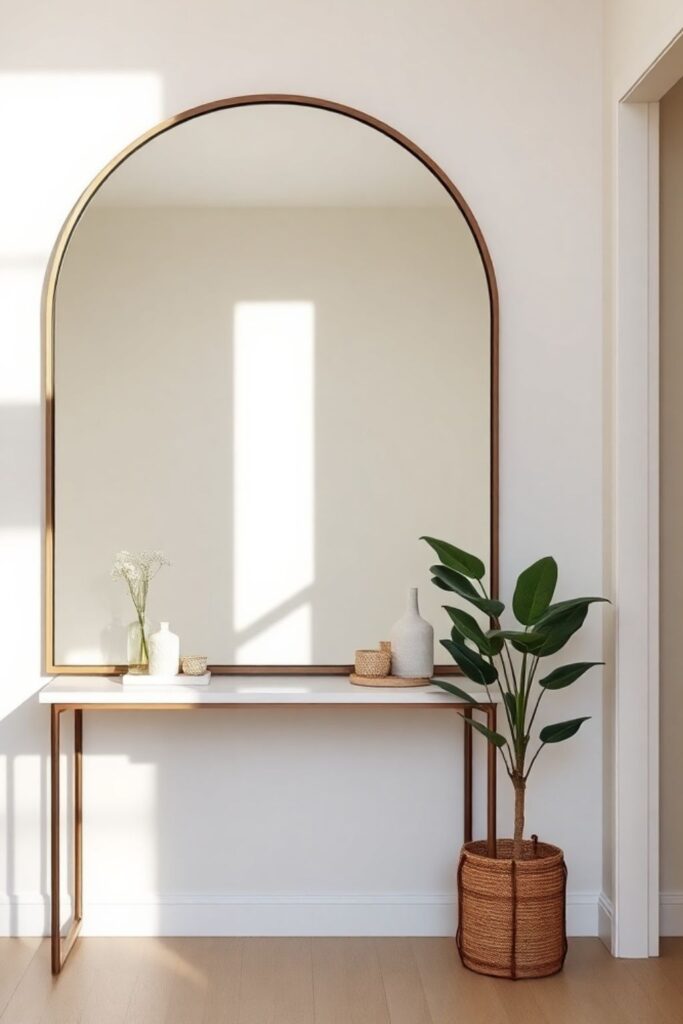
Place oversized mirrors opposite windows, above consoles, or behind lamps for the strongest effect. A simple frame keeps the look elegant while visually expanding compact rooms.
4. Maximize Vertical Space
Decorating upward helps tiny homes feel more spacious because it draws the eye beyond floor level. Vertical design uses blank walls wisely and keeps pathways, corners, and surfaces from becoming overloaded.
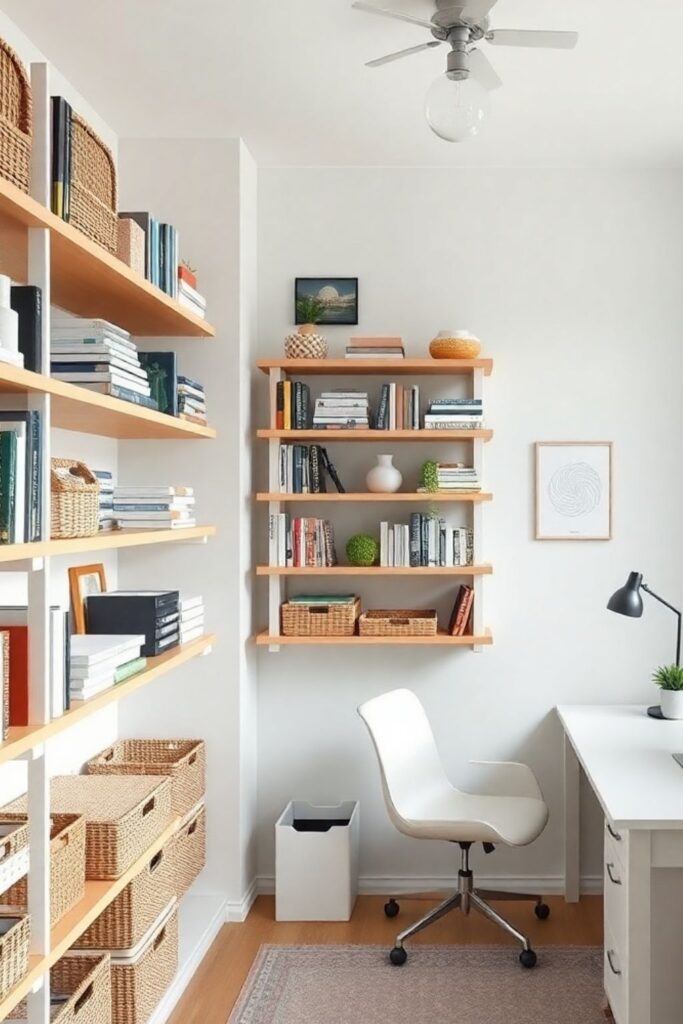
Install floating shelves, tall bookcases, hanging storage, and floor-to-ceiling cabinets wherever possible. These solutions maximize unused wall space while keeping everyday items organized, visible, and easy to reach.
5. Keep Decor Minimal
Fewer decorative pieces help a tiny home look cleaner, calmer, and more spacious. Open surfaces give the eye a place to rest, making the room feel intentional instead of visually busy.
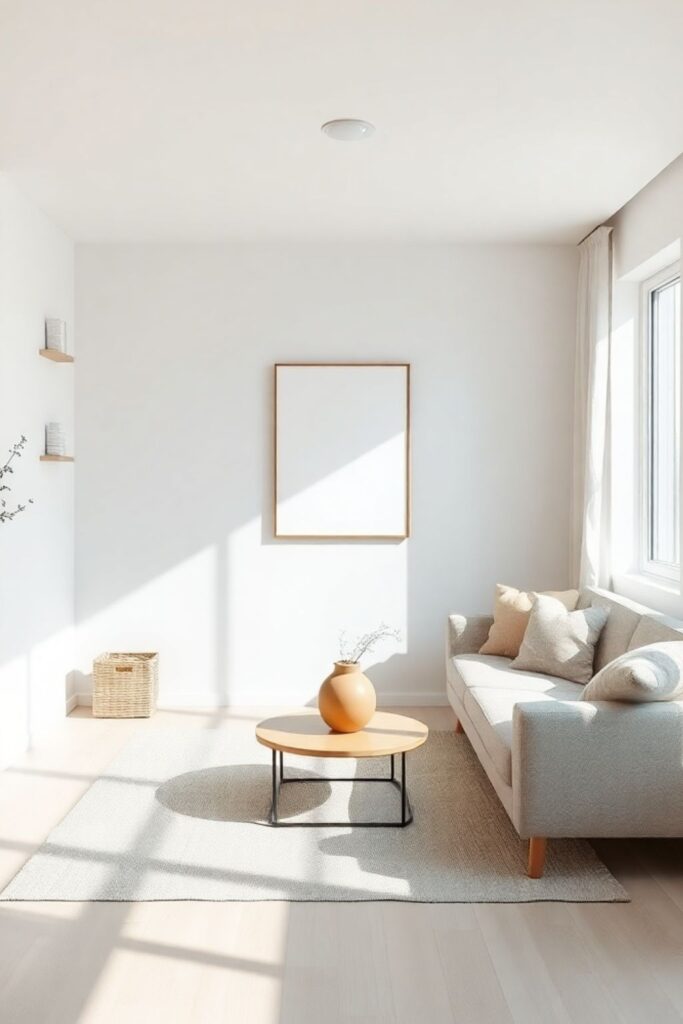
Choose a few meaningful accessories that reflect your style, such as a favorite vase, artwork, or candle. Avoid filling every shelf, tabletop, and corner just because space is available.
6. Choose Furniture with Visible Legs
Furniture with visible legs creates visual openness because more floor remains in view. That small detail can make sofas, chairs, and storage pieces appear lighter, which helps compact rooms feel less boxed in.
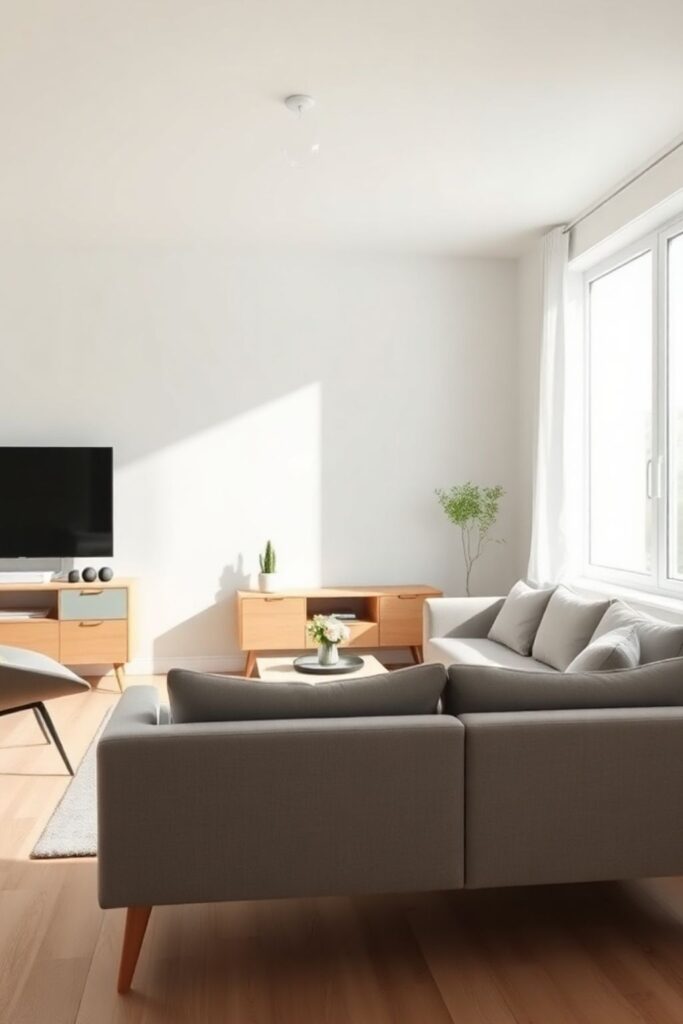
Look for sofas, chairs, media units, and side tables with slim frames and raised bases. The extra visible floor space creates an airy, uncluttered feeling.
7. Add Floating Shelves
Floating shelves add useful storage without the heaviness of bulky cabinets or bookcases. Because they keep the floor clear, they help small rooms feel more open while still offering space for display.
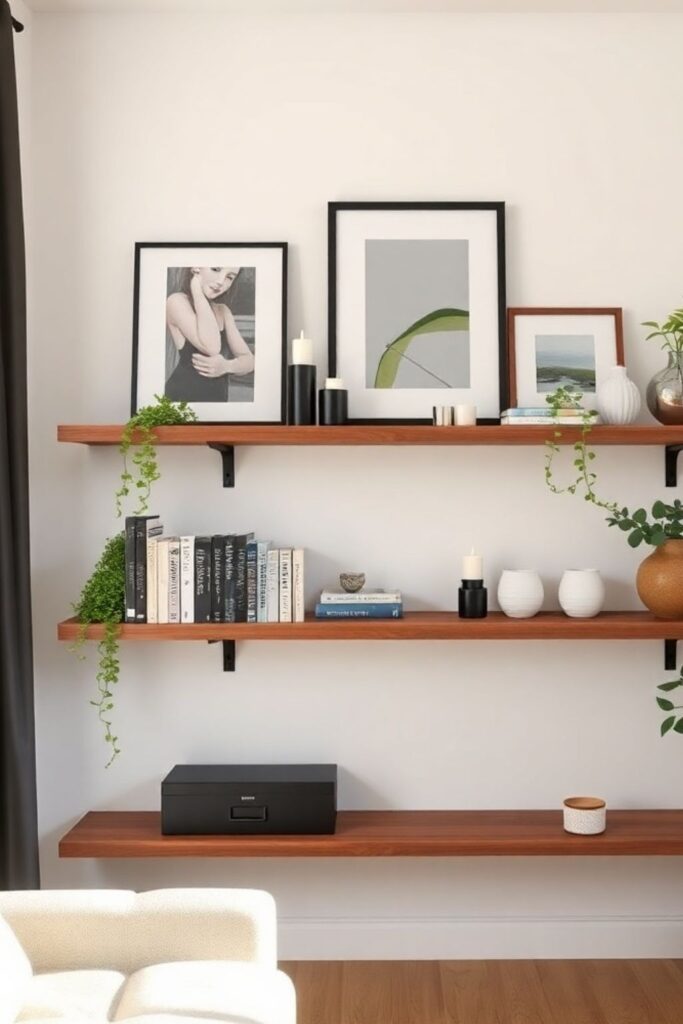
Style them with books, framed artwork, candles, plants, and small decorative objects. Leave breathing room between items so the shelves feel curated rather than crowded.
8. Use Hidden Storage
Concealed storage keeps tiny homes looking calm by hiding the items used every day. When clutter has a dedicated place, surfaces stay clear and rooms feel easier to enjoy.
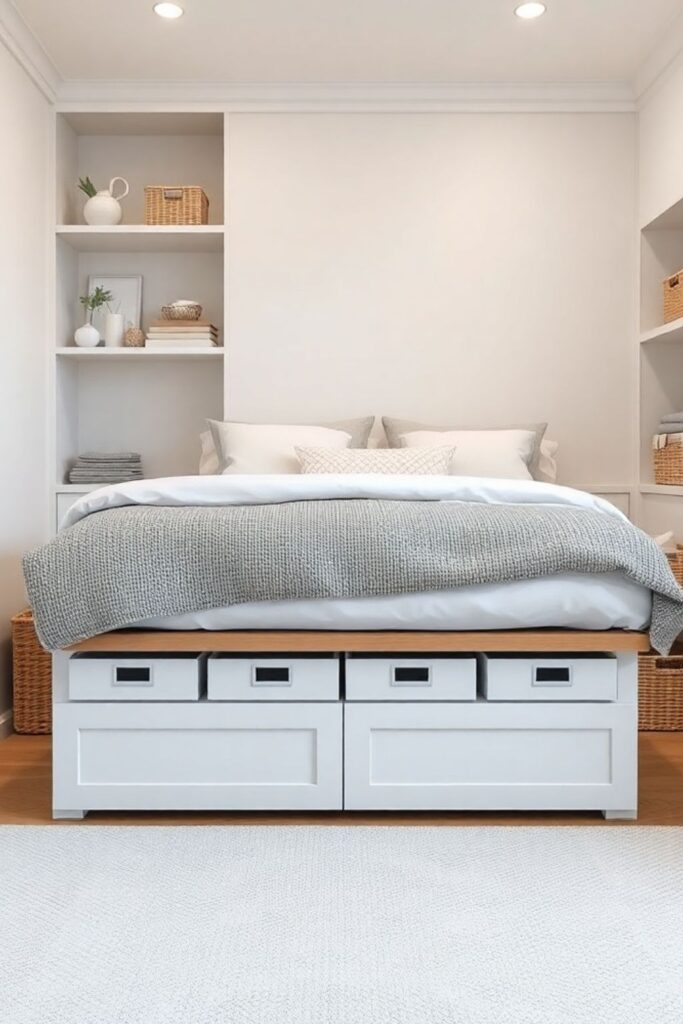
Use storage benches, under-bed containers, woven baskets, hidden compartments, and built-in cabinetry. These options protect function while maintaining a clean, seamless style throughout the home.
9. Bring in Natural Light
Natural light instantly makes small rooms feel larger, fresher, and more welcoming. Brightness softens boundaries, highlights textures, and gives compact interiors a more open atmosphere throughout the day.
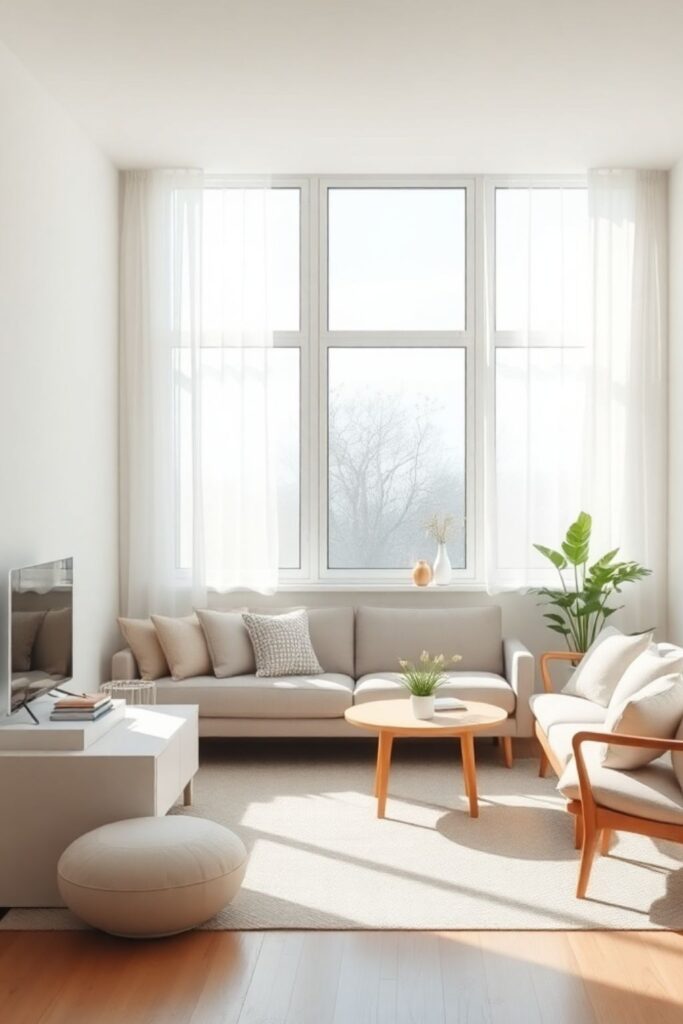
Choose sheer curtains, clean your windows often, and use light-colored window treatments. Keep sills simple and avoid bulky furniture that blocks sunlight from entering the room.
10. Add Indoor Plants
Indoor plants bring freshness, movement, and softness to tiny interiors without needing much space. Even a small touch of greenery can make a compact room feel more lively, balanced, and relaxed.
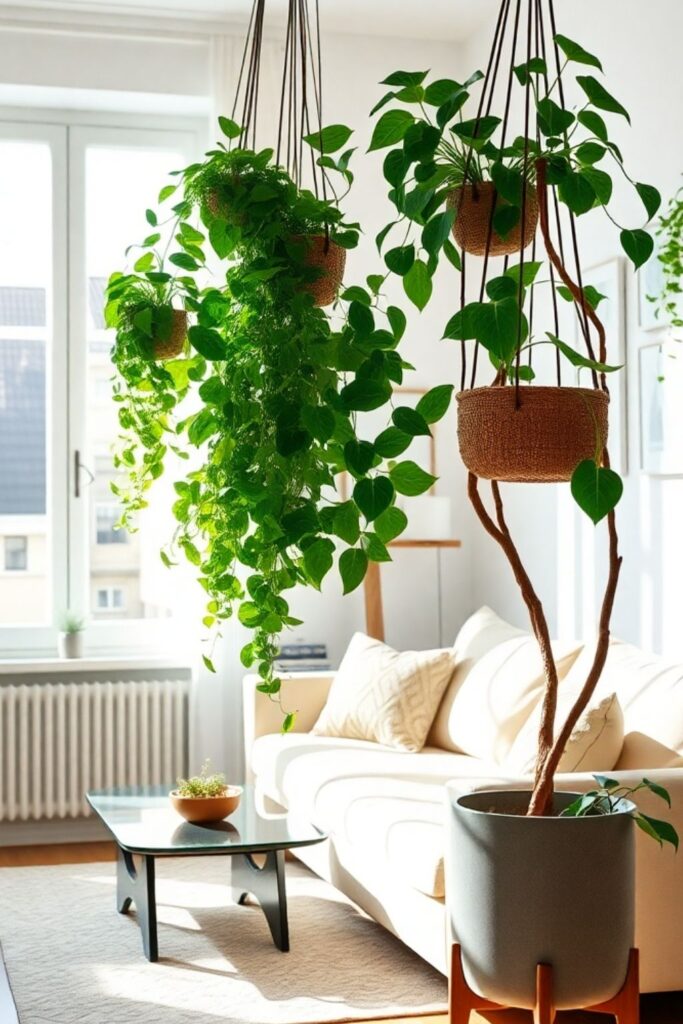
Choose compact plants for shelves, hanging planters for corners, or trailing vines above cabinets. One medium statement plant can also work beautifully when placed with intention.
11. Create a Cohesive Color Palette
Repeating colors throughout a tiny home creates visual flow from one area to the next. This consistency helps small spaces feel connected, organized, and larger than a collection of separate zones.
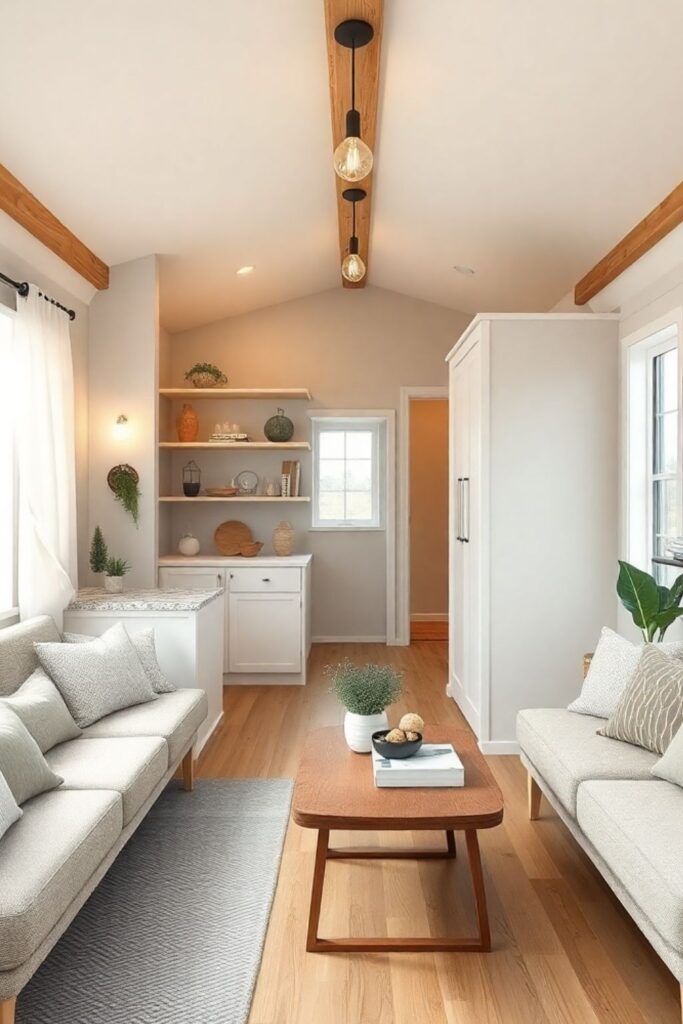
Limit your palette to two or three main colors, then add complementary accent shades. Repeat them through rugs, cushions, artwork, decor, and textiles for a polished look.
12. Use Rugs to Define Spaces
Area rugs visually separate functional zones in open layouts, especially when living, dining, and sleeping areas share one room. They help each section feel purposeful without needing walls or bulky dividers.
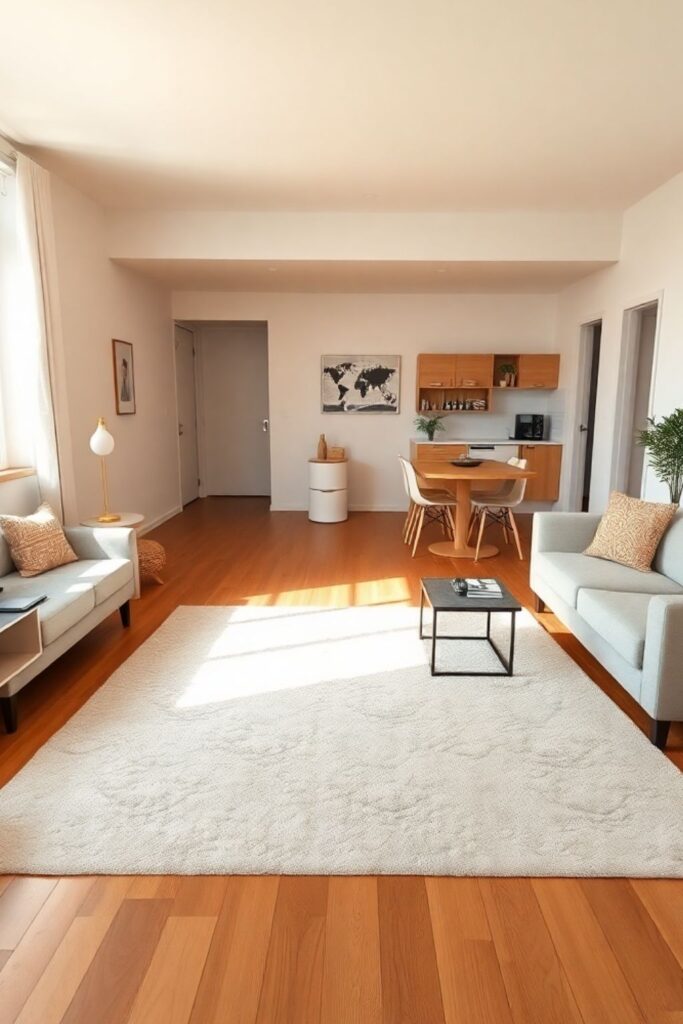
Choose appropriately sized rugs that anchor the furniture instead of floating awkwardly. Subtle patterns and coordinated colors keep the layout cohesive while adding warmth underfoot.
13. Decorate with Wall Art
Wall art adds personality to a tiny home without taking up precious floor space. The right piece can introduce color, mood, and character while keeping furniture arrangements simple and efficient.
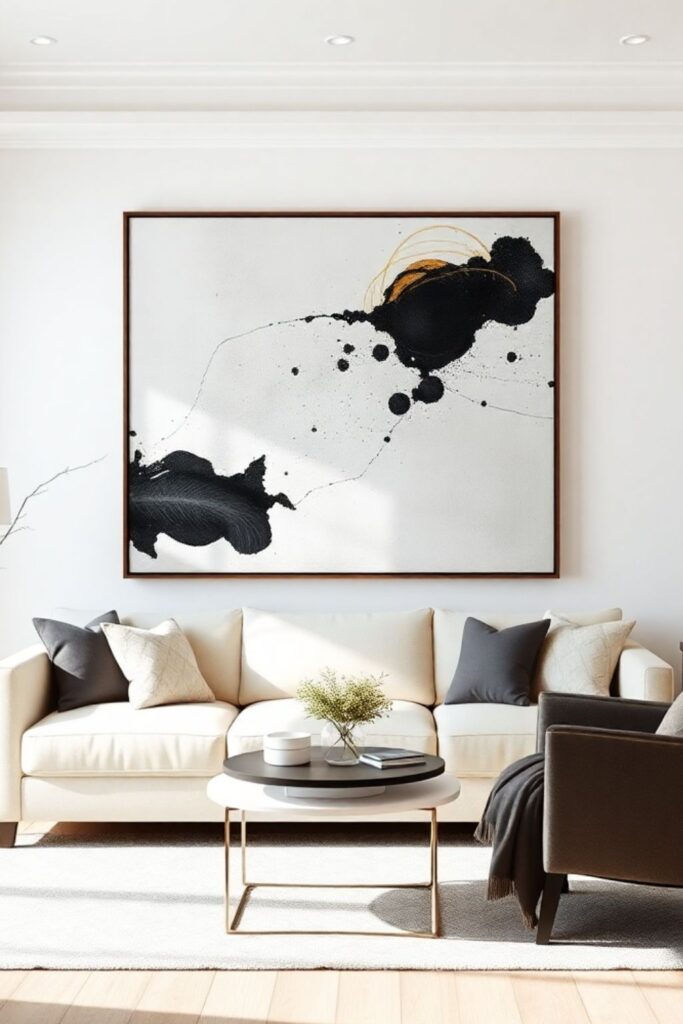
Choose one large artwork for a clean focal point or create a balanced gallery wall. Keep frames, colors, and spacing consistent so the display complements the overall decor.
14. Layer Soft Textures
Layered textures make compact interiors feel cozy, warm, and inviting without requiring extra furniture. Texture adds depth to simple rooms, helping neutral palettes feel rich rather than flat.
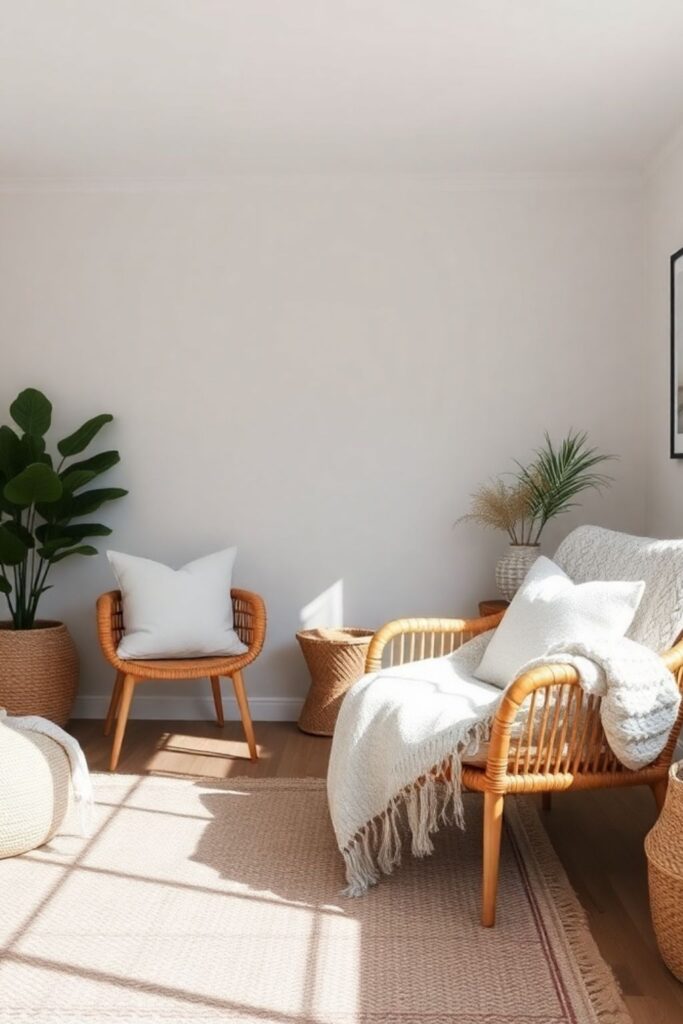
Mix linen cushions, knitted throws, woven baskets, boucle fabrics, and textured rugs. These soft layers create comfort while keeping the space visually interesting, relaxed, and touchable.
15. Choose Space-Saving Lighting
Lighting shapes both function and atmosphere in a tiny home. Good lighting helps each area feel usable, comfortable, and layered, especially when natural light changes throughout the day.
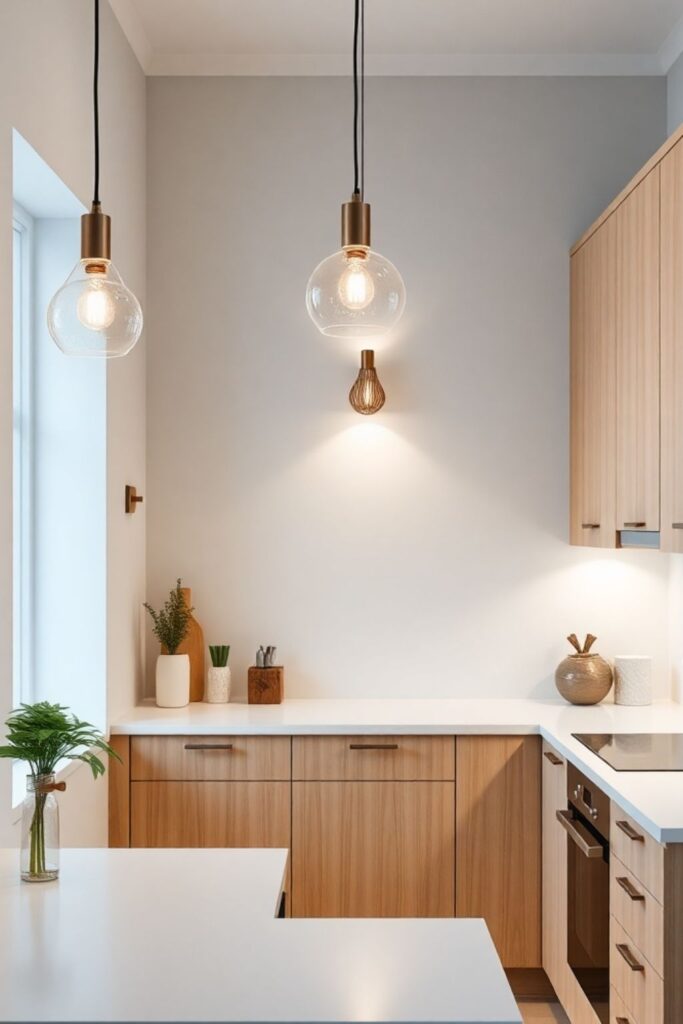
Use wall sconces, pendant lights, slim floor lamps, or under-cabinet lighting to save surface space. These choices brighten rooms without crowding side tables, counters, or shelves.
16. Style Open Shelving Carefully
Open shelving works best when it feels balanced rather than packed with too many things. In a tiny home, crowded shelves can quickly make the entire room feel visually heavier.
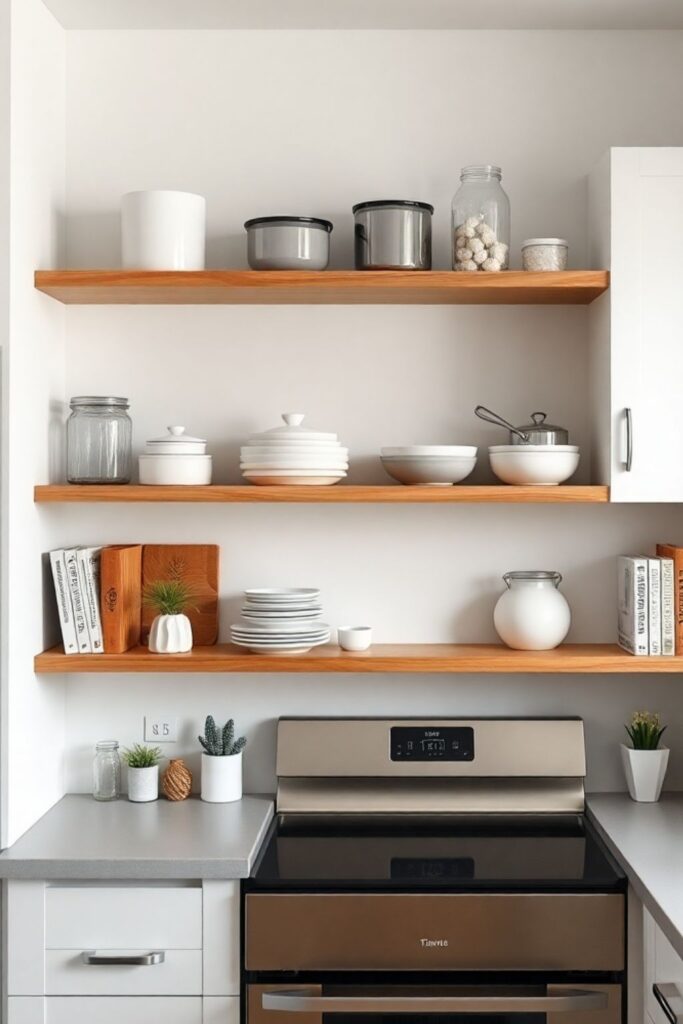
Group decorative items, books, ceramics, and greenery in small arrangements. Leave intentional empty space between collections so each shelf feels styled, practical, and easy to clean.
17. Incorporate Natural Materials
Natural materials bring warmth, texture, and character to compact homes. They soften modern lines, balance simple color palettes, and make small spaces feel grounded rather than overly polished.
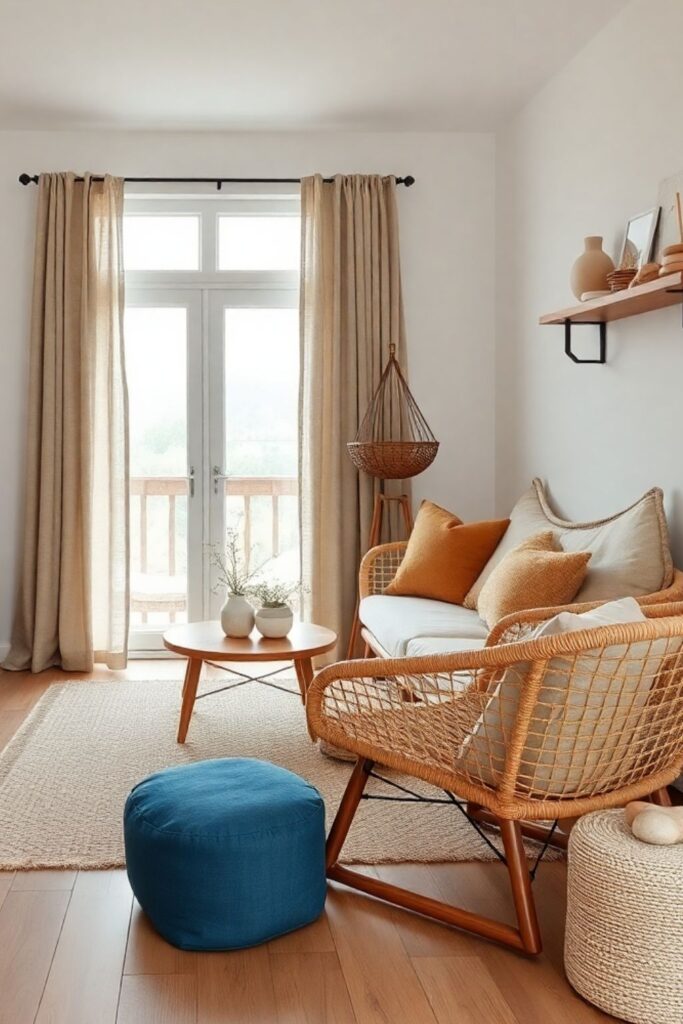
Incorporate wood, rattan, jute, linen, stone, and ceramic accents through furniture and decor. These timeless elements add depth while keeping the overall look relaxed, organic, and welcoming.
18. Keep Every Space Functional
Every corner should serve a purpose in a tiny home, whether it supports storage, seating, work, or relaxation. When function guides decorating choices, small spaces feel easier to live in.
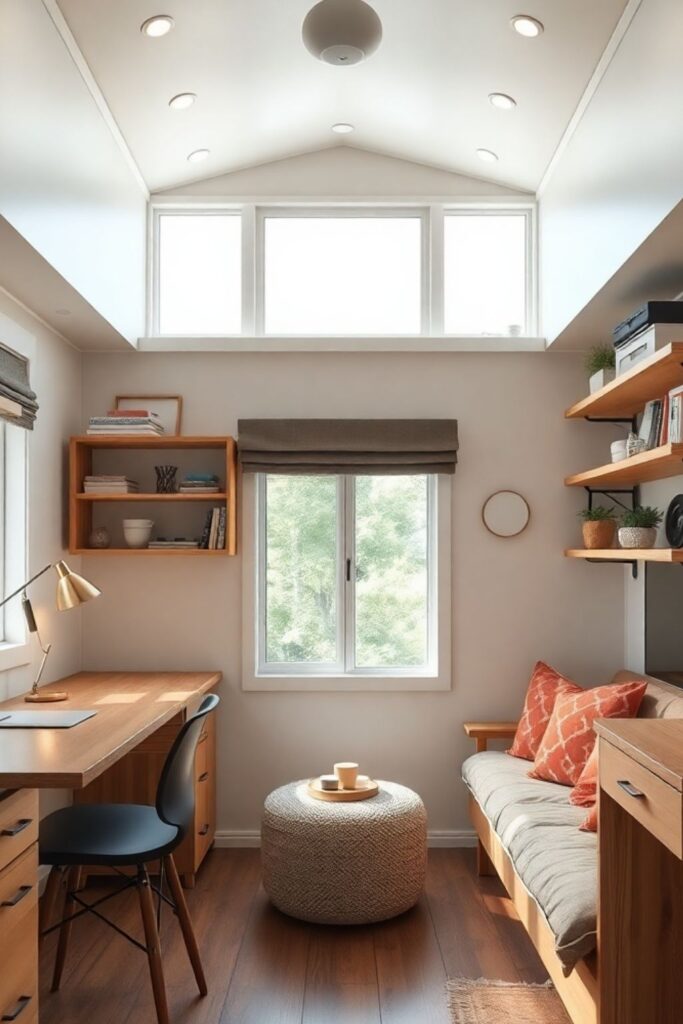
Choose practical furniture, minimize unnecessary decor, and organize regularly. This keeps the home beautiful, efficient, and comfortable while making sure each inch supports your everyday lifestyle.
By combining these tiny home decor ideas, you can create a stylish, comfortable, and functional space that feels personal, polished, and beautifully livable.