
19 Affordable Home Decor Ideas for Rooms That Feel Like You
You straighten the sofa cushions, move a stack of mail, and still feel like the room is missing something. Usually, it is not another big piece of furniture. It is a softer texture, a little color, or something with a story. These Affordable Home Decor Ideas lean on secondhand finds, simple DIY projects, and things you might already own, from a linen pillow cover to a painted bedside table. You can start with one small corner and end with a home that feels more personal, relaxed, and genuinely yours.
1. Slip Linen Covers Over Existing Pillows
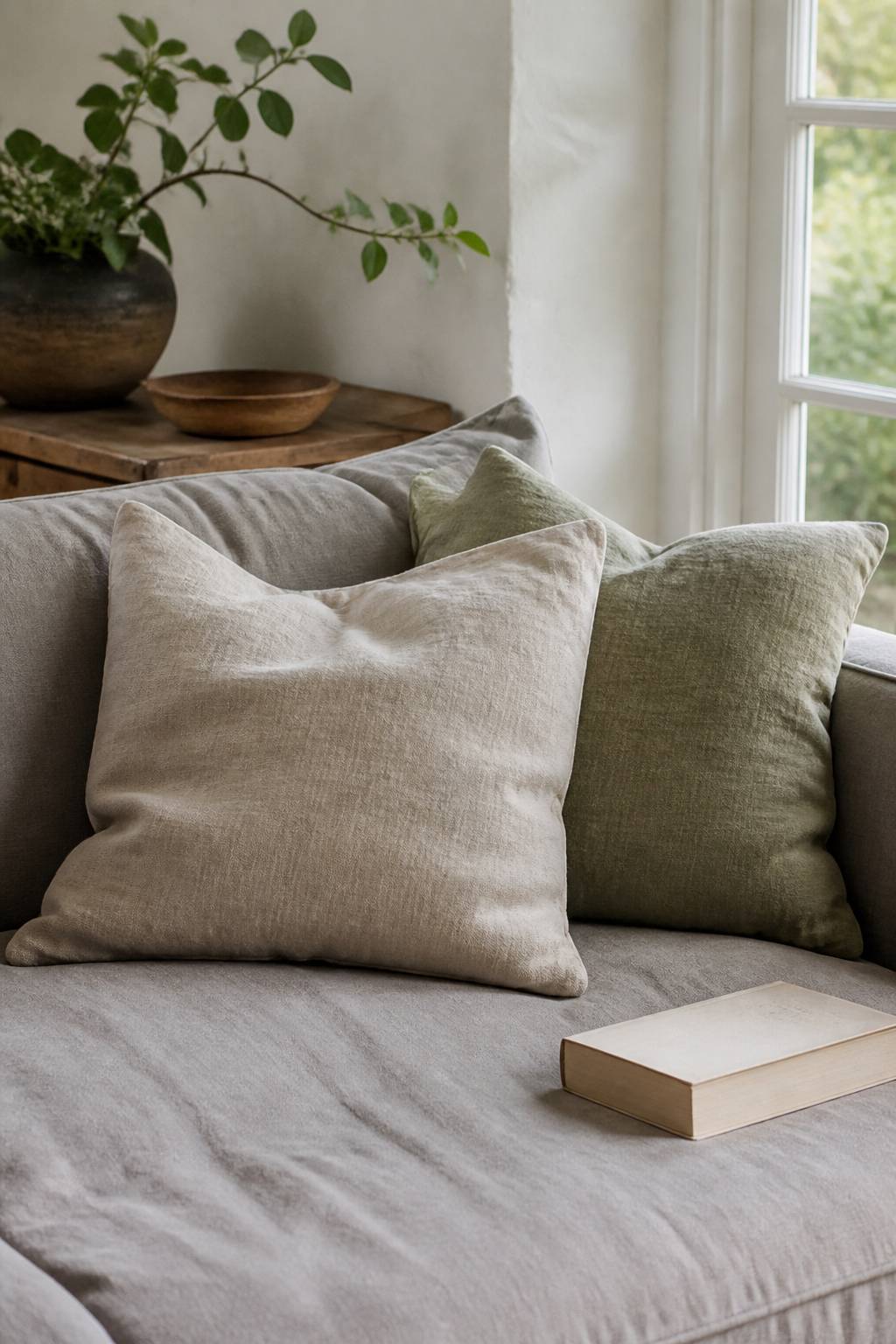
Oatmeal linen and faded olive pillow covers give an ordinary gray sofa a softer, organic modern feel. Keeping your existing inserts makes this a small swap, while the rumpled fabric keeps everything relaxed rather than showroom stiff.
For a fuller look, put a 20 inch insert inside an 18 inch cover. Secondhand cotton or linen covers wash easily, but measure them after laundering before buying inserts.
2. Frame Thrifted Botanical Book Pages
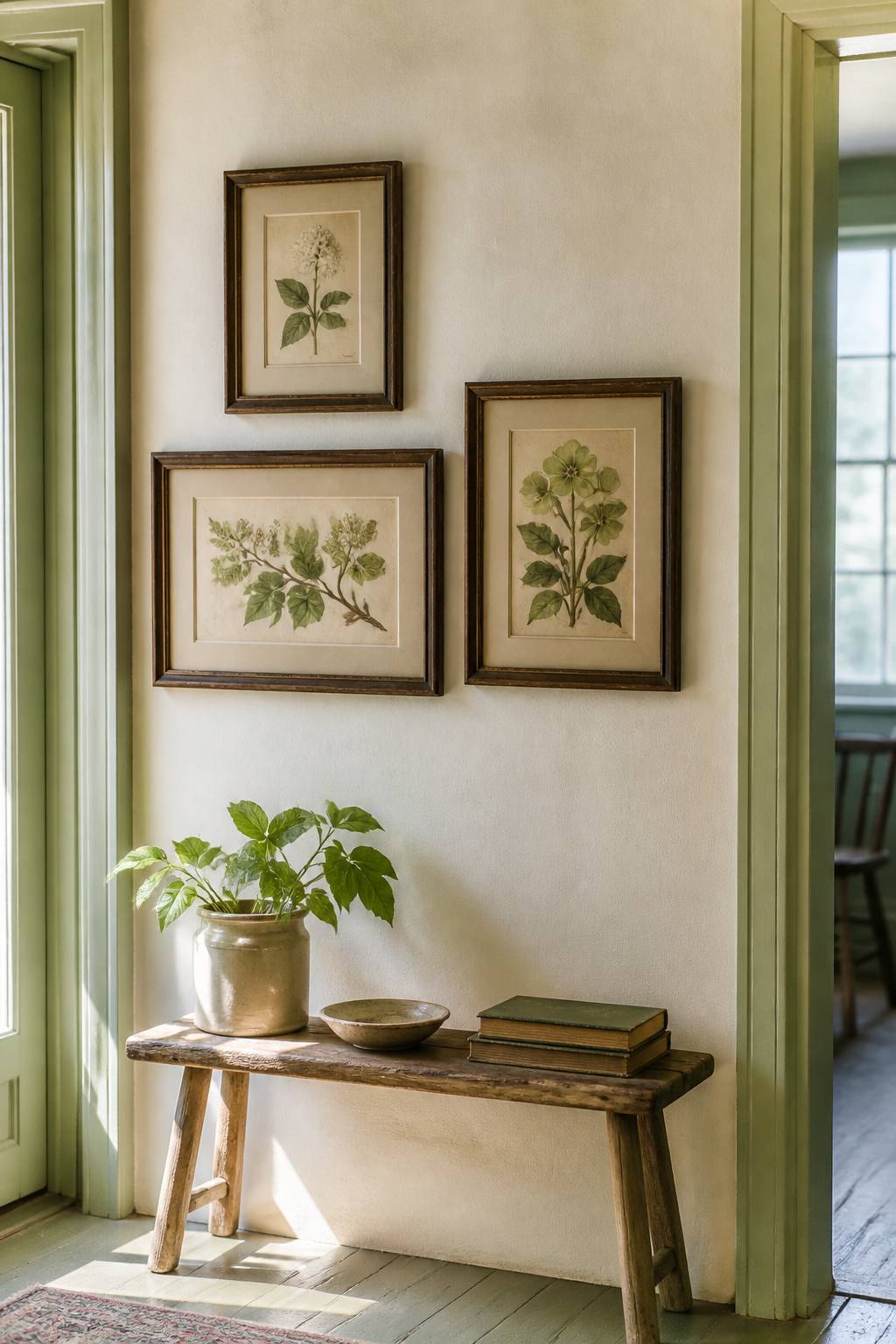
Muted green botanical pages in mismatched wood frames turn a narrow hallway into a little vintage gallery. An inexpensive damaged gardening book supplies the artwork, and the imperfect frames make the arrangement feel collected over time.
Lay the frames on the floor first, leaving about two inches between edges. Plain cream paper behind smaller prints makes different frame sizes look connected instead of accidentally mismatched.
3. Paint a Nightstand Dusty Blue
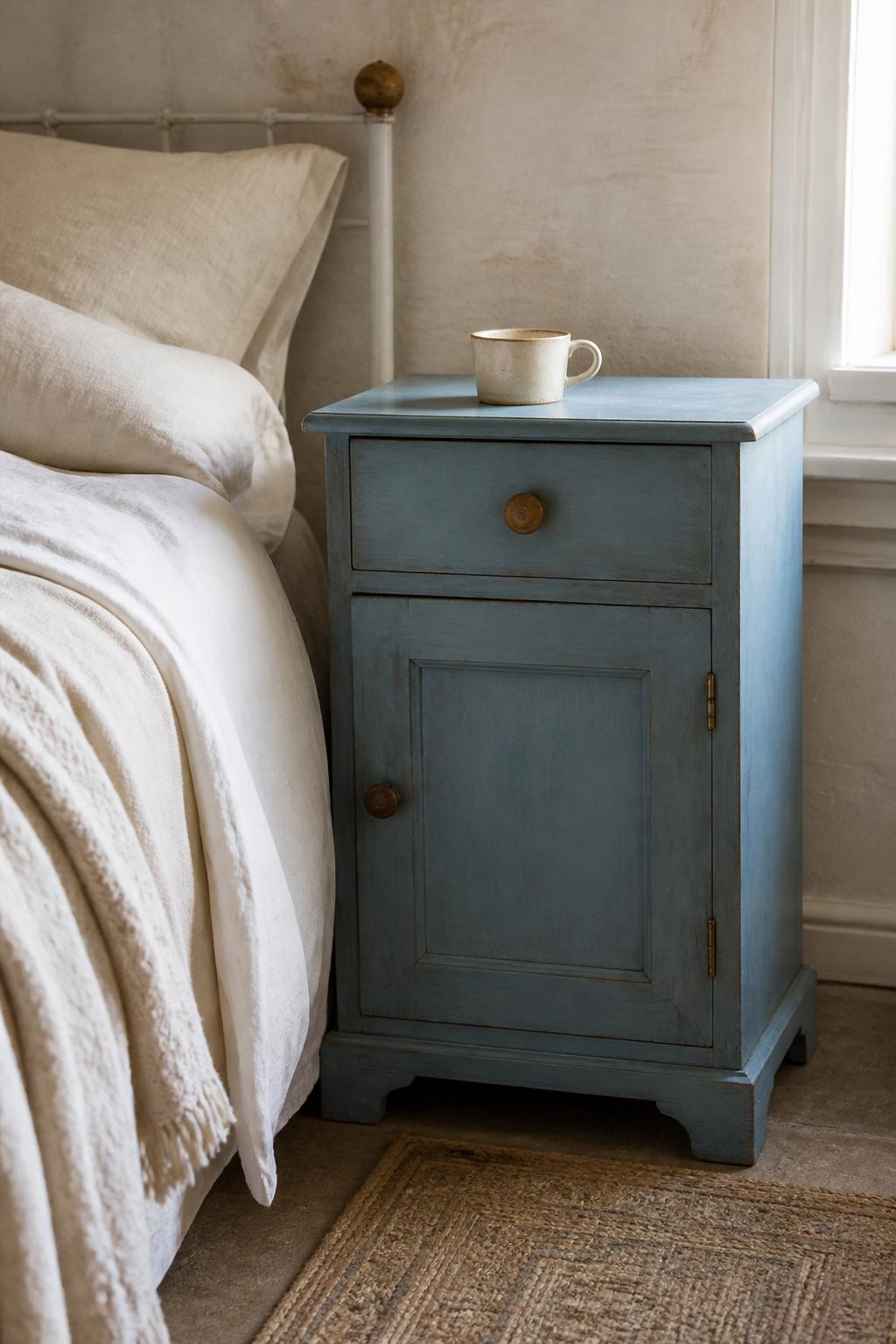
Dusty blue paint gives a scratched secondhand nightstand a cottage bedroom personality. Against cream bedding, the chalky color feels quiet and fresh, while its original wooden knob keeps a little of the piece’s old character.
A small foam roller leaves fewer ridges on the top than a brush. Clean off furniture polish and lightly sand glossy areas first, especially around the handle and edges.
4. Hang Simple Cotton Cafe Curtains
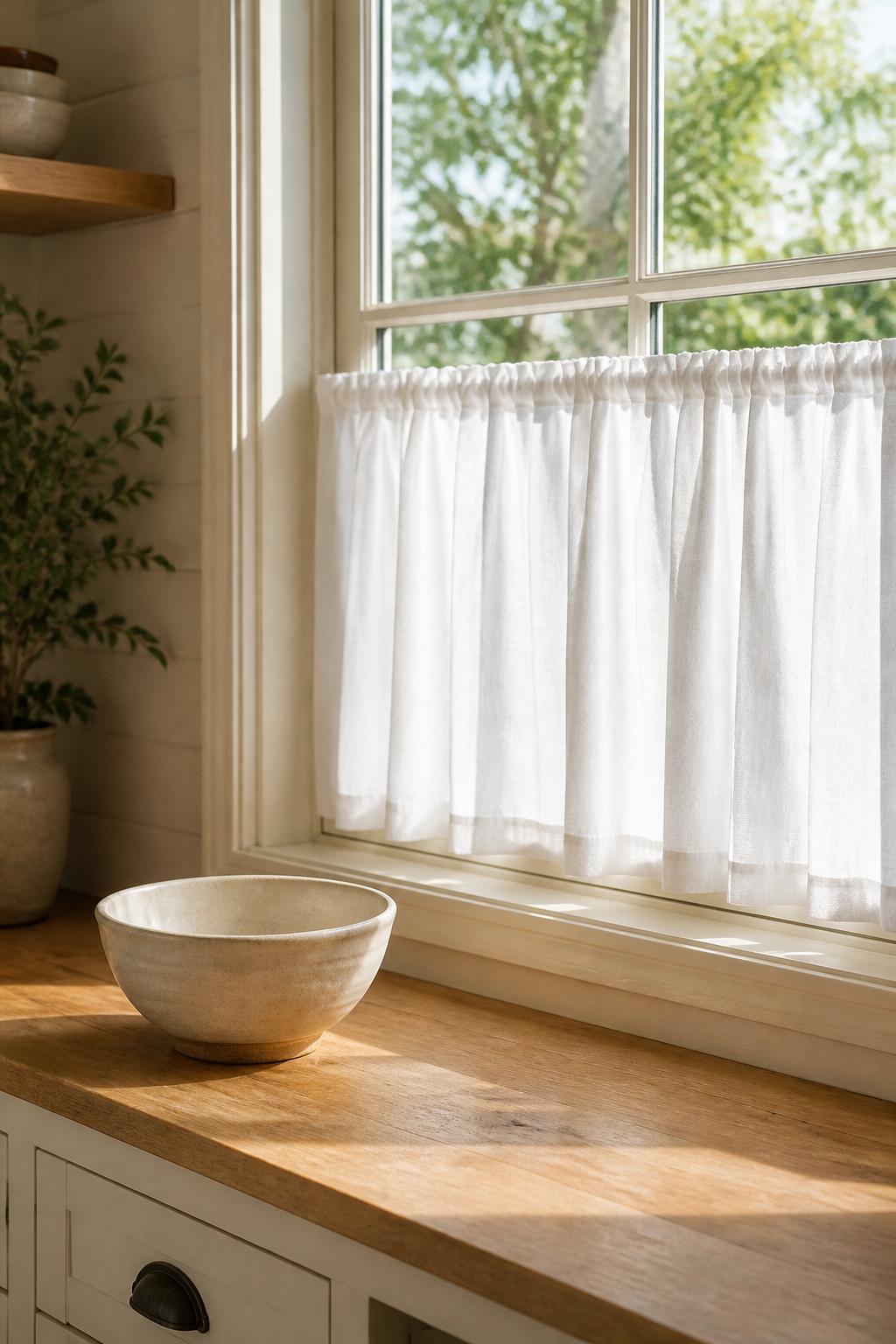
Soft white cafe curtains across the lower half of a kitchen window feel cheerful and slightly nostalgic. Hemmed secondhand cotton panels deliver that little bistro mood while leaving the upper glass open to the sky.
A tension rod lets you skip drilling into the window trim. Cut each panel roughly one and a half times its half of the opening for gentle, loose gathers.
5. Gather Daily Essentials on a Tray
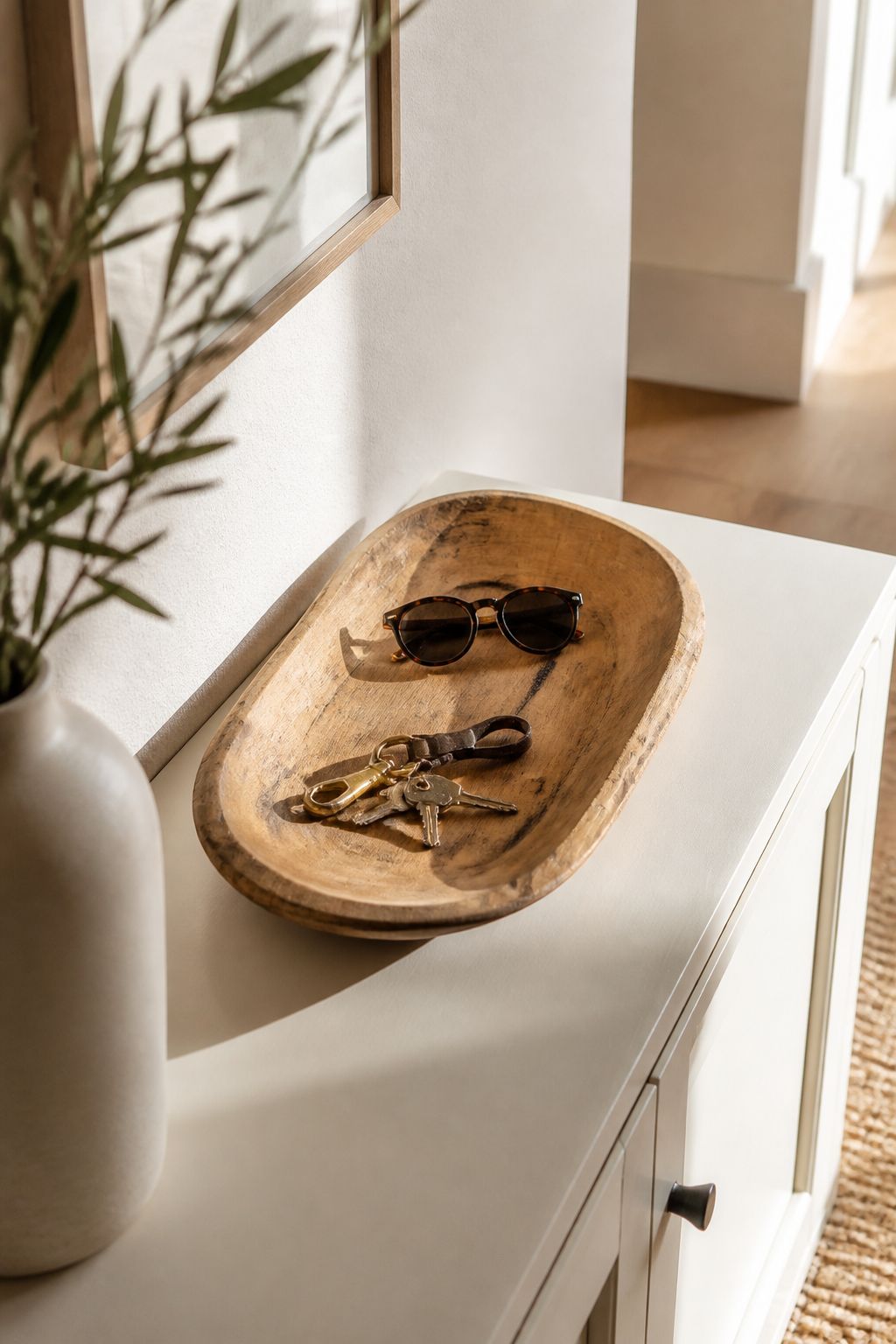
A thrifted shallow wooden tray makes an entryway’s everyday clutter look intentional. Your keys and sunglasses get a defined landing spot, and the worn honey finish brings a little warmth to a plain white console.
Look for a tray with an inside width of at least ten inches. A scrap of felt underneath stops a rough secondhand base from scratching the console’s painted surface.
6. Display Branches in a Stoneware Pitcher
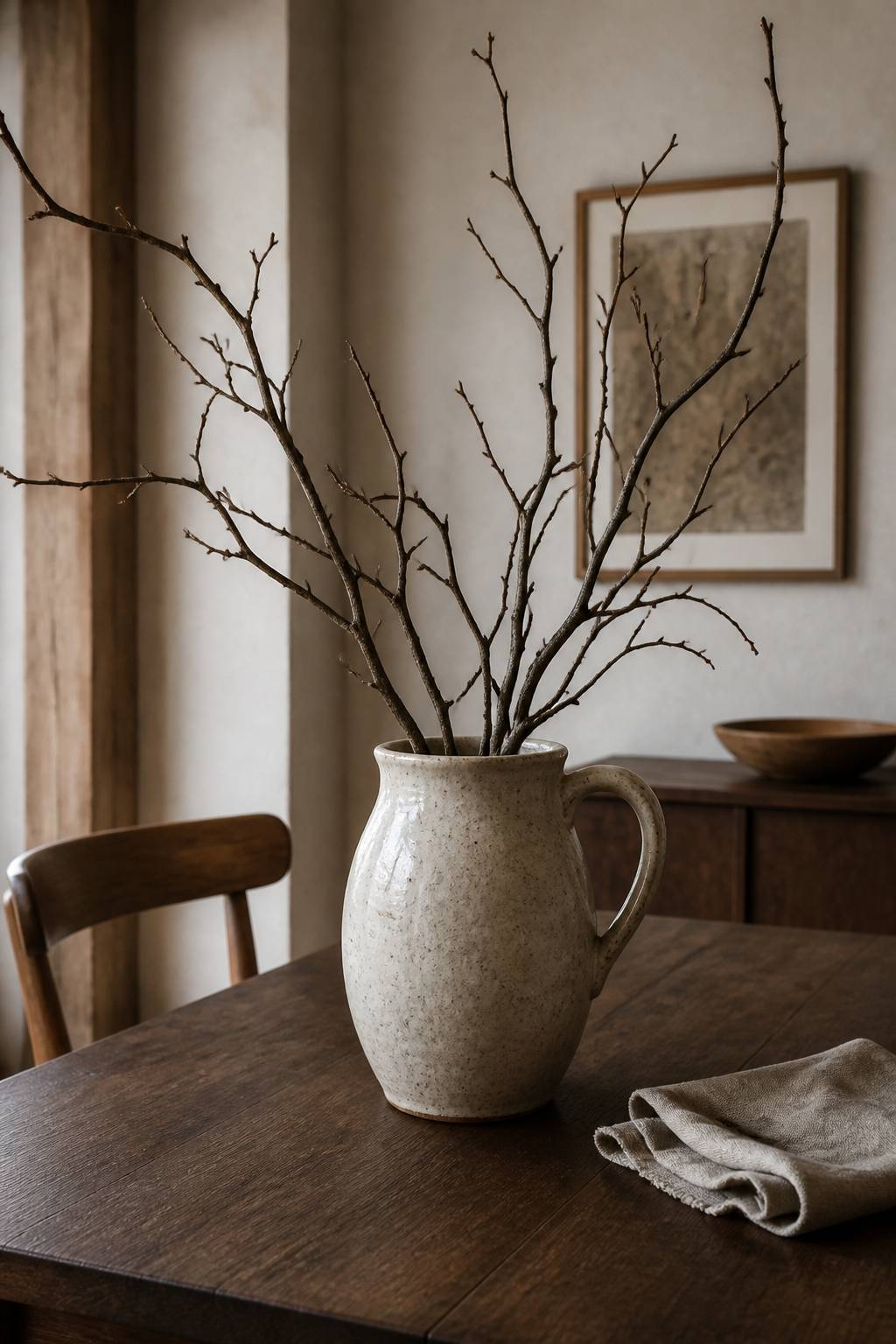
Bare branches in a secondhand stoneware pitcher give a dining room the sculptural shape of a large arrangement. The speckled cream glaze and crooked twigs feel earthy, spare, and especially good beside dark wood furniture.
Choose fallen branches about twice the pitcher’s height, then trim from the bottom. A few small stones inside help counterbalance a branch that leans farther out than the others.
7. Swap Dresser Pulls for Warm Brass
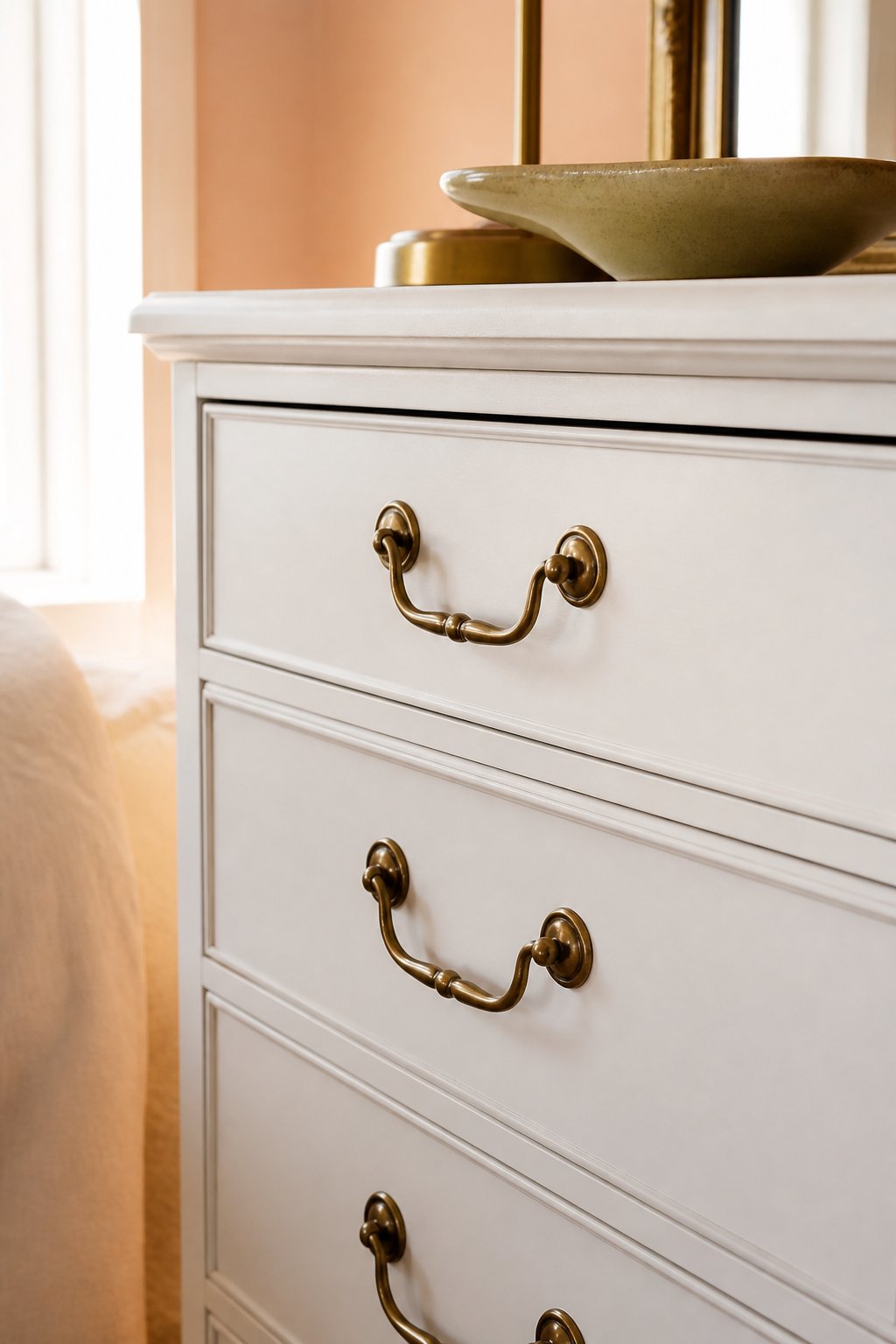
Warm brass pulls give a plain white dresser a polished vintage edge. Secondhand hardware makes the change feel less predictable, especially when the finish has a little patina instead of a perfectly matching golden shine.
Measure between the centers of the existing screw holes before hunting for replacements. Matching that distance saves you from filling, sanding, and repainting every drawer front just to change handles.
8. Stencil a Small Checkerboard Doormat
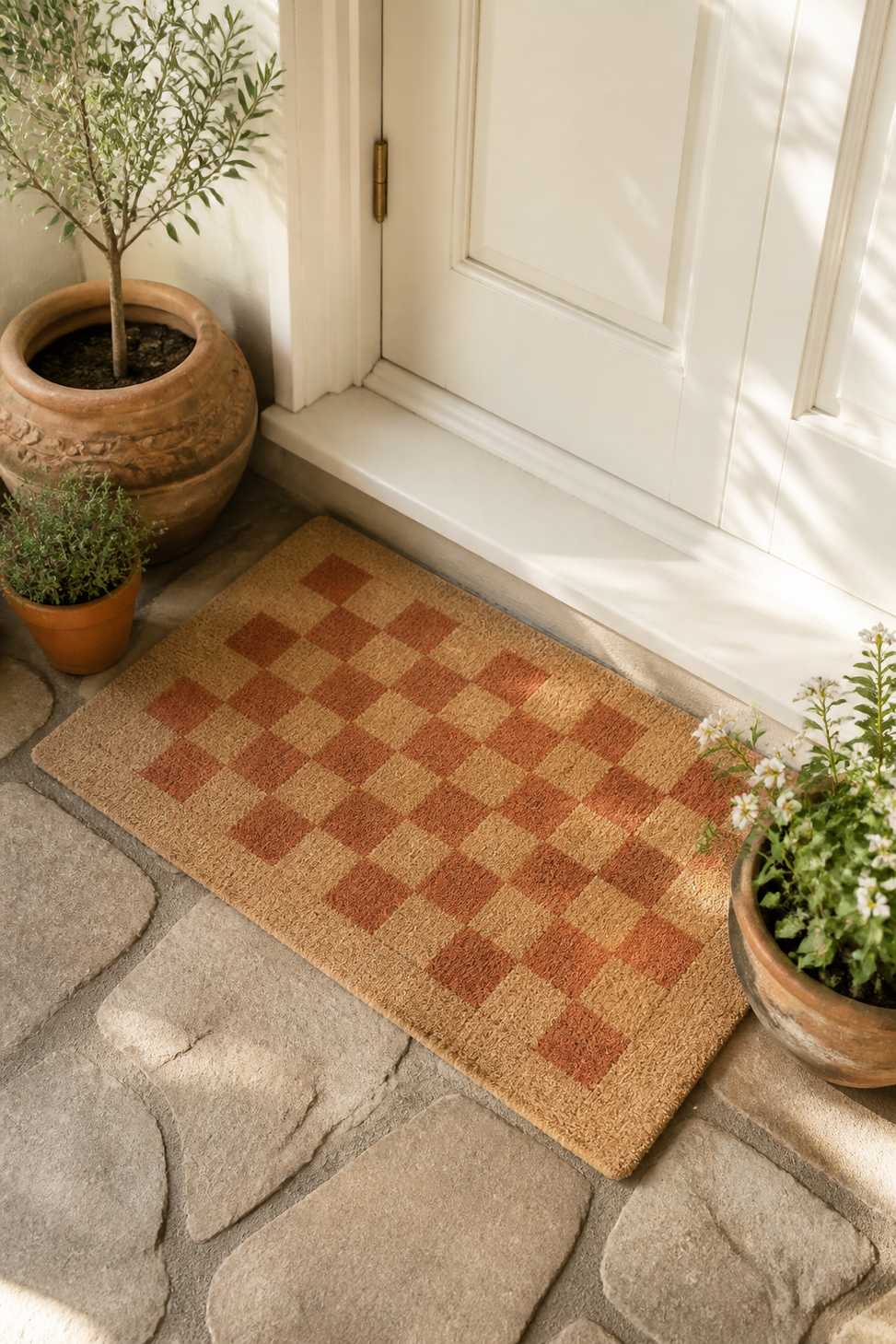
Terracotta squares on a plain coir doormat give a sheltered front entry a playful cottage welcome. Updating an inexpensive blank mat keeps the project small, and the natural brown fibers soften the crisp checkerboard pattern.
Press painter’s tape firmly into the coir, then dab exterior paint on with a nearly dry stencil brush. Heavy coats seep beneath the tape and turn sharp squares fuzzy.
9. Drape a Quilt Over Your Headboard
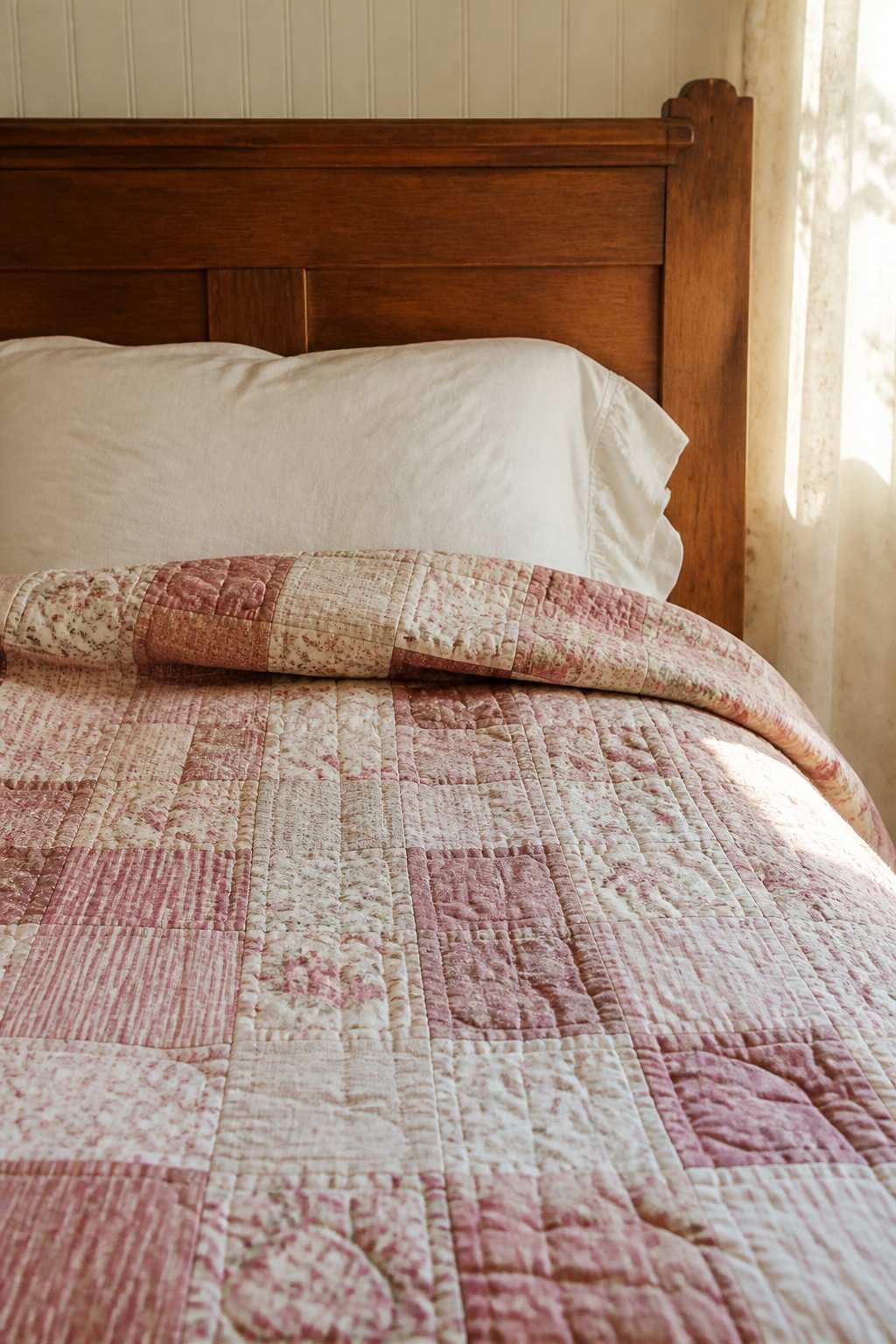
An inherited patchwork quilt folded over a plain headboard brings faded rose, cream, and tiny floral prints into the bedroom. It gives an unremarkable bed a cozy focal point using a textile you already own.
Fold the quilt so its best patchwork sits on the front, with more fabric hanging behind the headboard. That extra weight helps the fold stay put when you adjust pillows.
10. Turn a Wooden Crate Into Storage
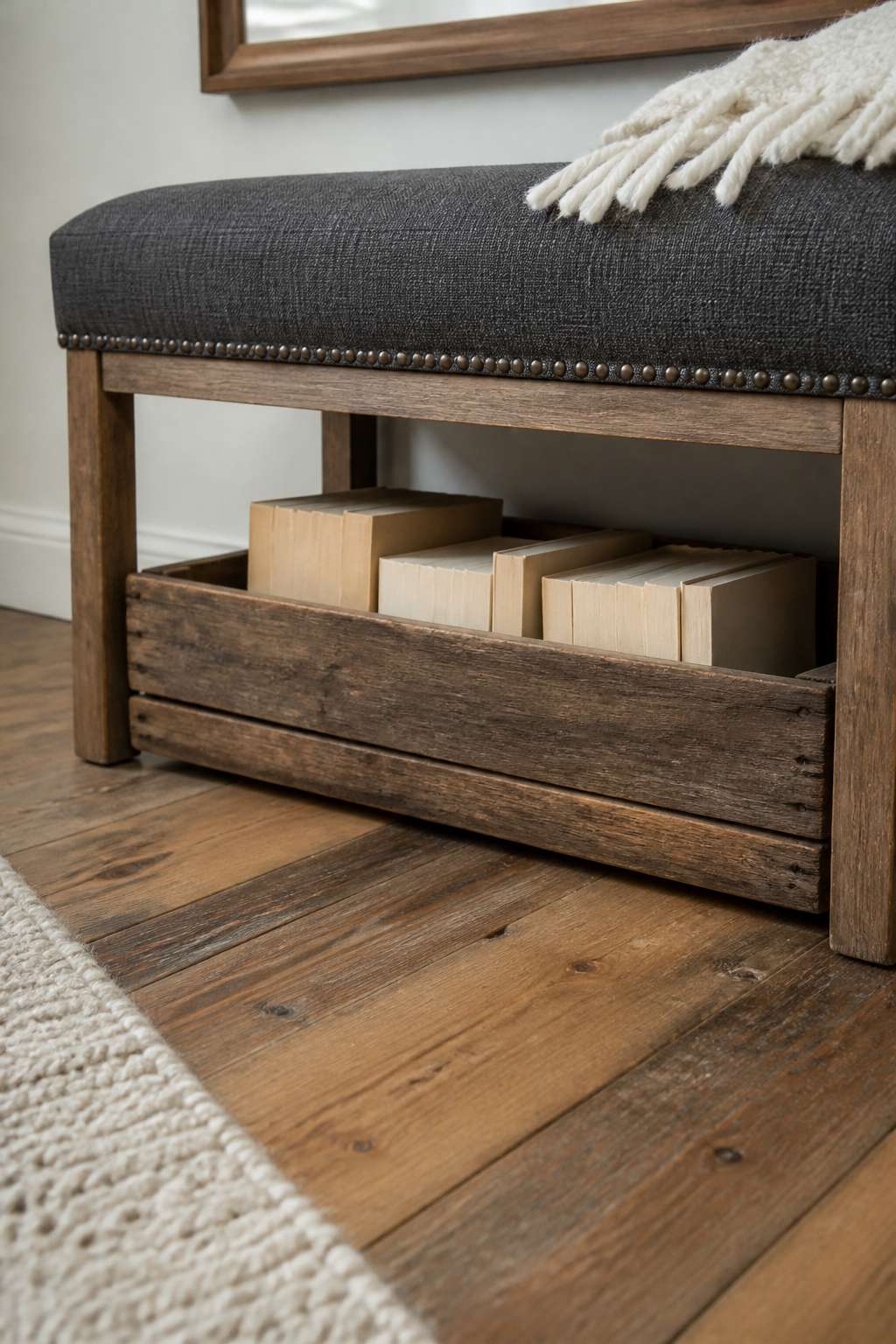
An old wooden crate tucked under a living room bench makes paperback storage feel pleasantly rustic. The weathered slats add texture beside smooth upholstery, and books stay within reach instead of forming little piles everywhere.
Sand the hand openings and top edges before bringing a found crate indoors. Felt pads under all four corners let you pull it out more easily across a wood floor.
11. Refresh a Lampshade With Fabric Remnants
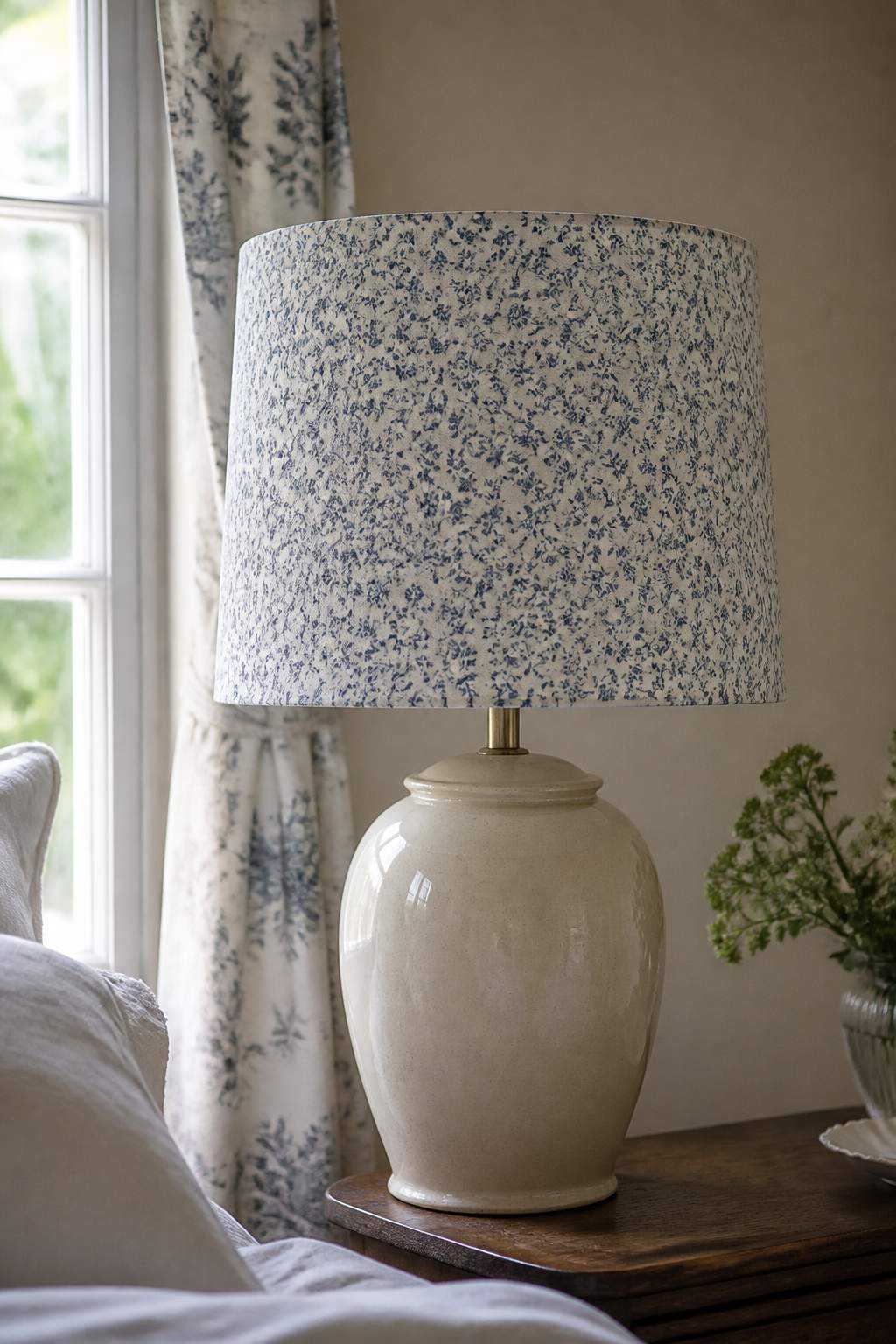
A tiny blue floral fabric remnant turns an existing drum lampshade into a charming bedside detail. Against a simple cream lamp base, the pattern feels English country, with just enough color to wake up neutral bedding.
Start with an intact fabric shade and use lightweight cotton, not heavy upholstery scraps. Keep the original top and bottom openings clear, and pair the lamp with an LED bulb.
12. Lean a Secondhand Mirror on Furniture
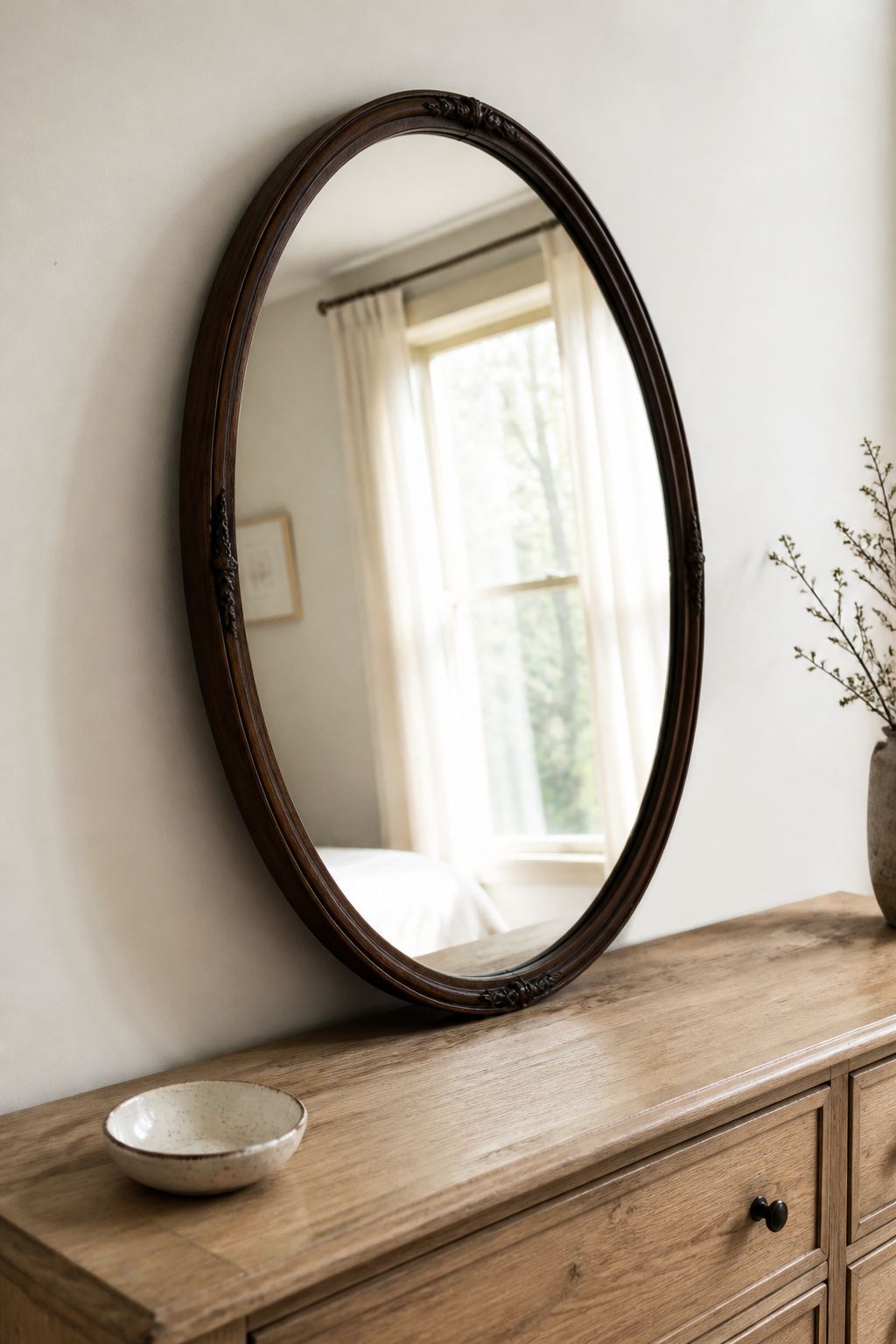
An oval secondhand mirror resting on a bedroom dresser makes a blank wall feel finished. A dark wood frame adds vintage contrast to pale walls, and reflected window light gives the whole corner a gentler glow.
A dresser at least eighteen inches deep gives the frame room to lean. Secure the mirror with a wall tether behind its top edge rather than relying on its weight.
13. Cover a Backsplash With Removable Tiles
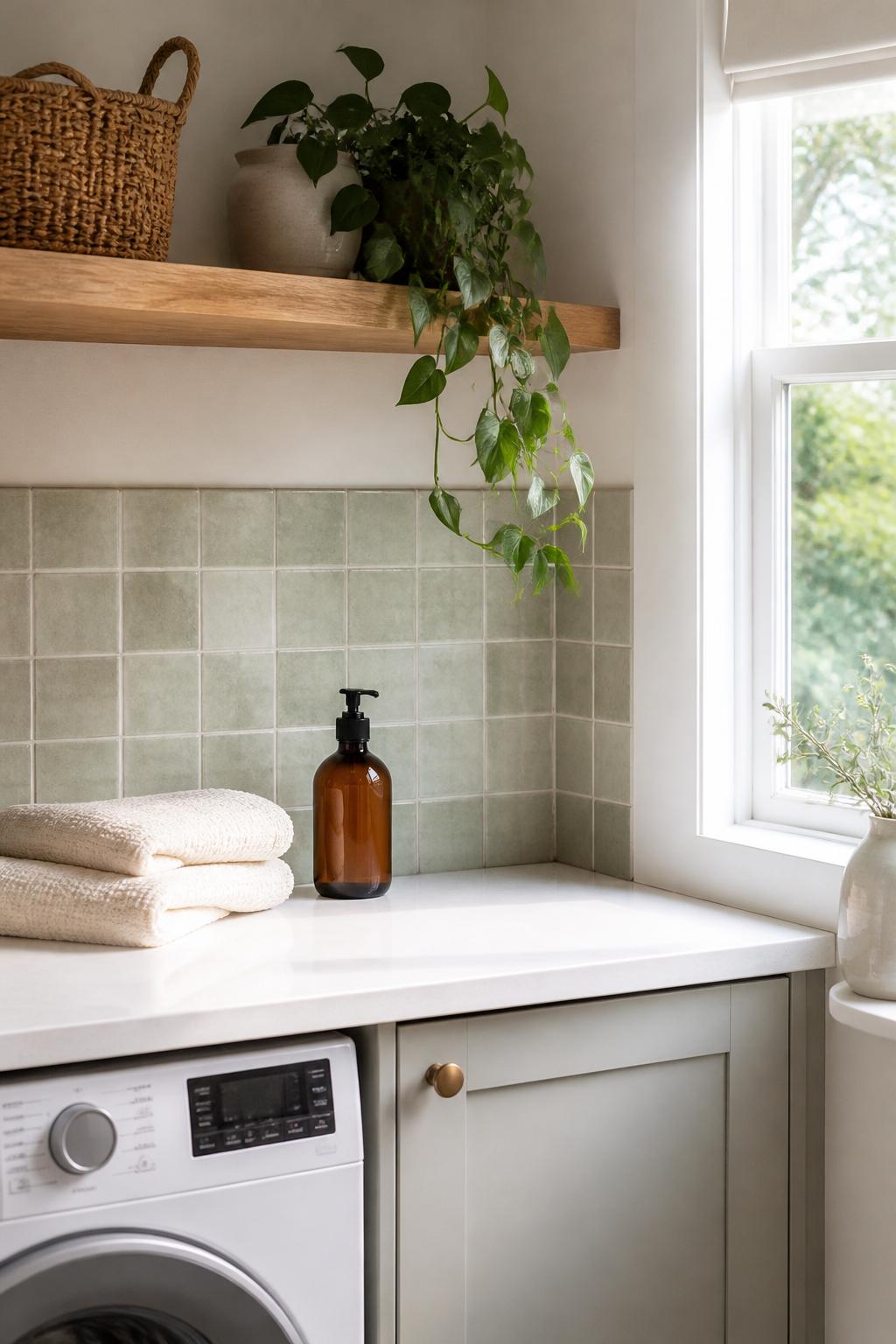
Muted sage peel-and-stick tiles give a small laundry nook a fresh, finished backdrop. Covering only the strip above the utility counter keeps the material needs modest, while the soft green makes everyday chores look less dreary.
Test one tile on a hidden painted patch before committing. Start with a level line above the counter, since following a sloped countertop can make every row look crooked.
14. Corral Bathroom Towels in Woven Baskets
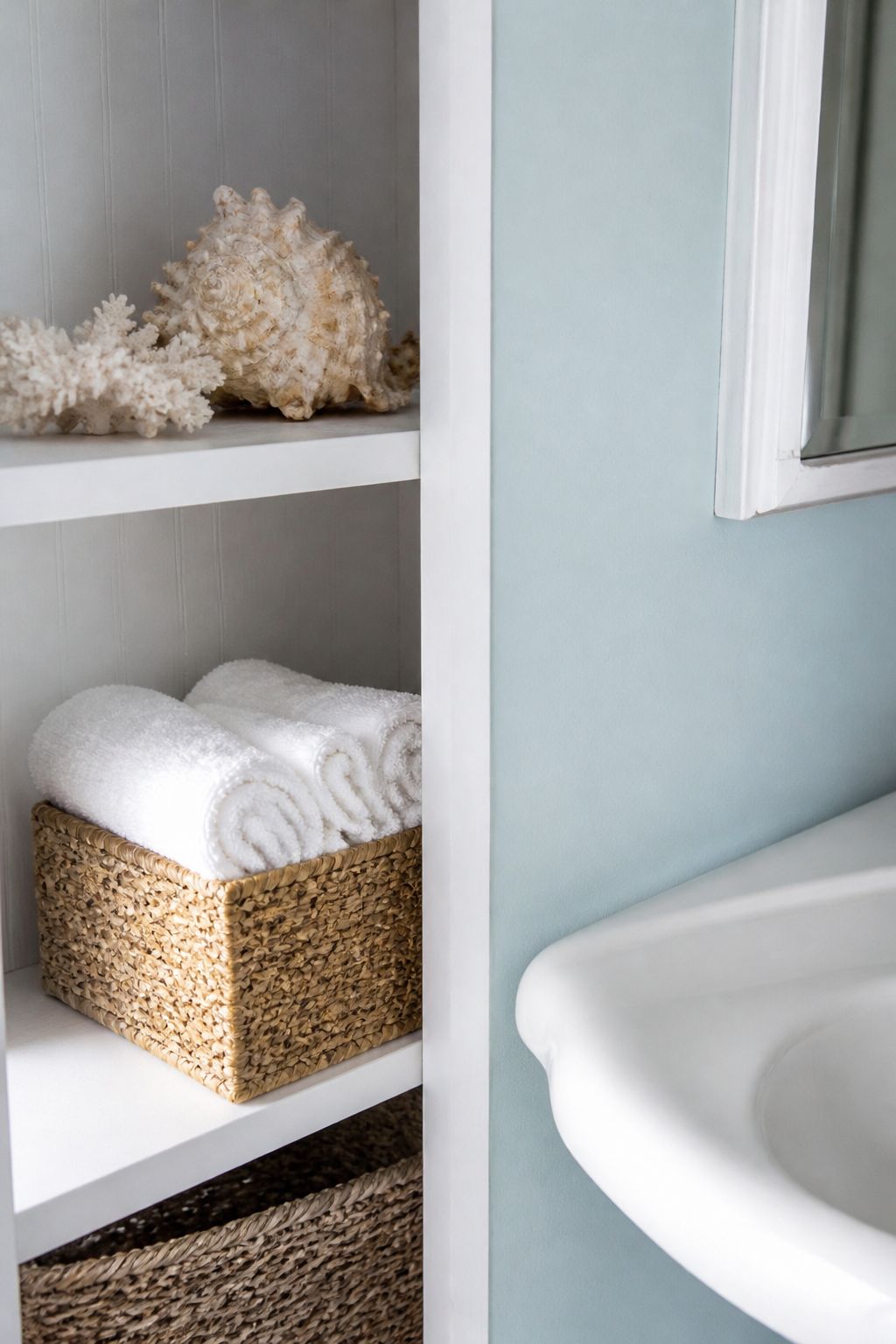
Rolled white washcloths in a thrifted woven basket make an open bathroom shelf look calm and useful. The golden fibers break up all that porcelain, giving even a basic rental bathroom a little coastal texture.
Measure the shelf depth before thrifting, and leave an inch behind the basket. A washable cotton liner keeps loose wicker ends from catching loops in your clean washcloths each morning.
15. Arrange Mismatched Plates Above a Sideboard
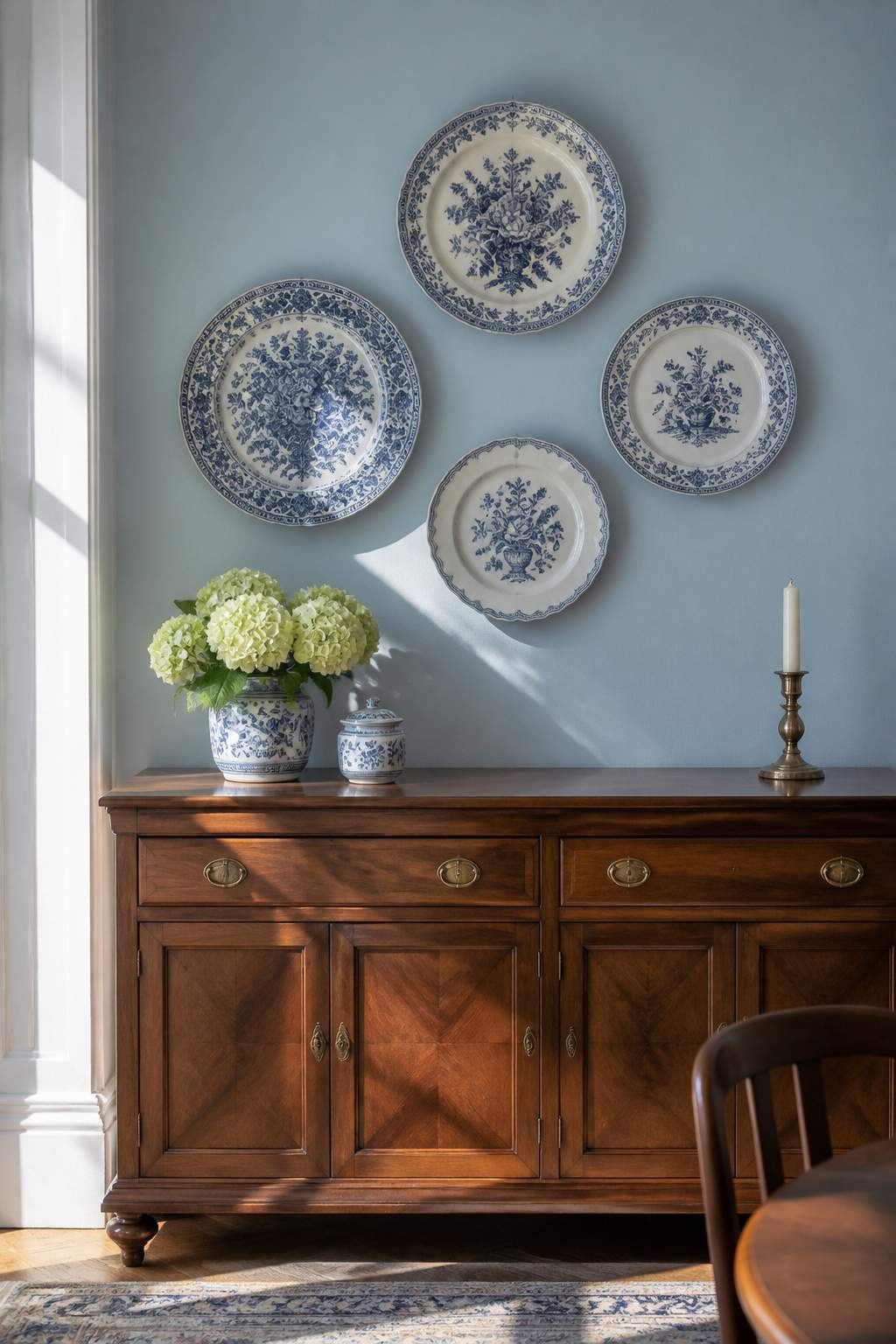
Thrifted blue-and-white plates gathered above a sideboard make a dining room wall feel like a family collection. Different scalloped edges and floral patterns provide the detail, so you do not need expensive oversized artwork.
Trace each plate onto paper and tape the shapes up first. Keep the largest plate slightly off center, then use spring plate hangers sized to each plate’s actual diameter.
16. Wrap Plain Planters in Burlap Sleeves
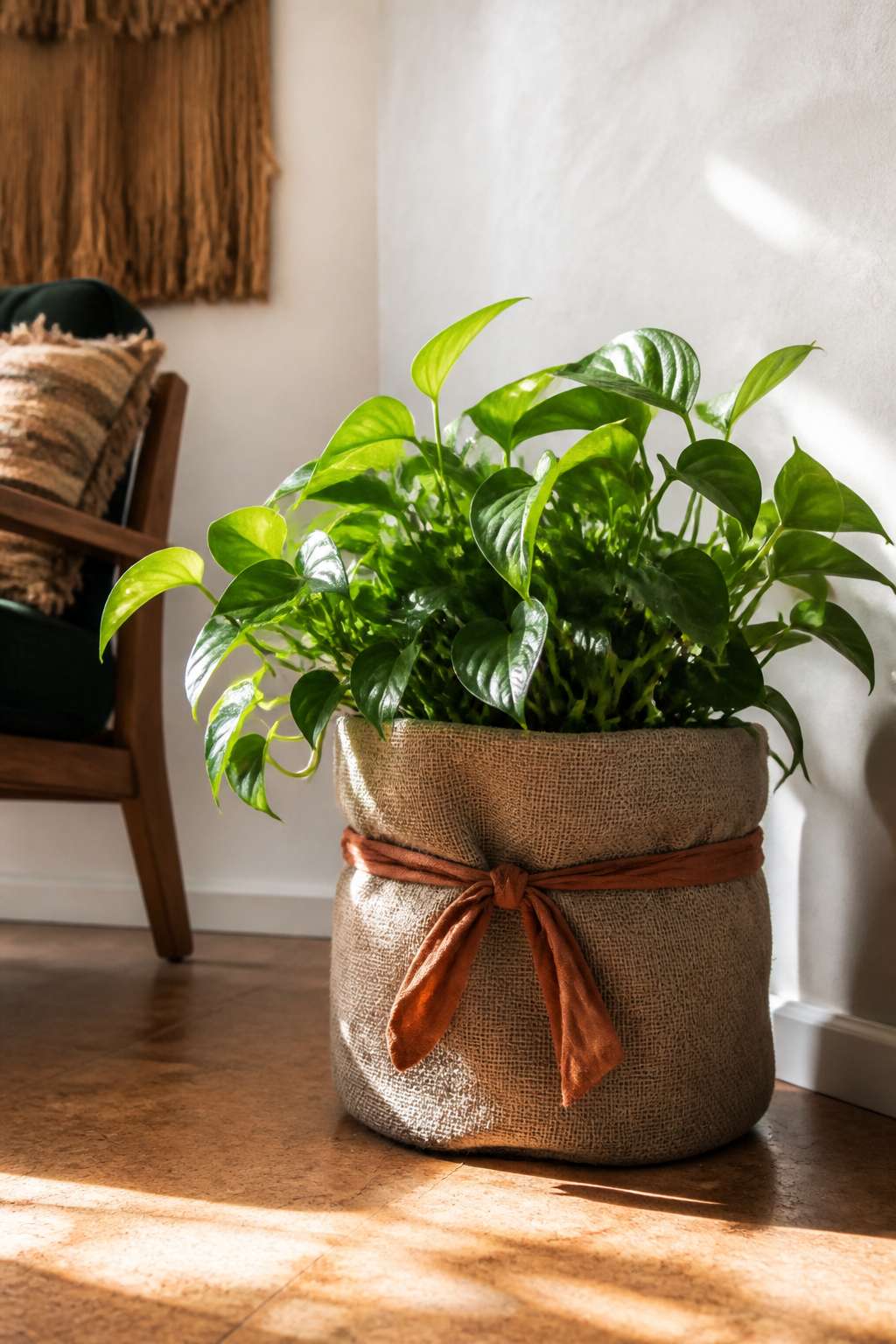
Burlap wrapped around an existing plastic planter gives a leafy houseplant a softer, earthy base. A leftover ribbon in faded rust holds the sleeve together, making an ordinary pot feel at home in a boho corner.
Keep the burlap above the drainage holes and remove the sleeve before watering. Fold the upper edge inward twice so loose fibers do not spill onto the surrounding furniture.
17. Build a Picture Ledge From Scrap
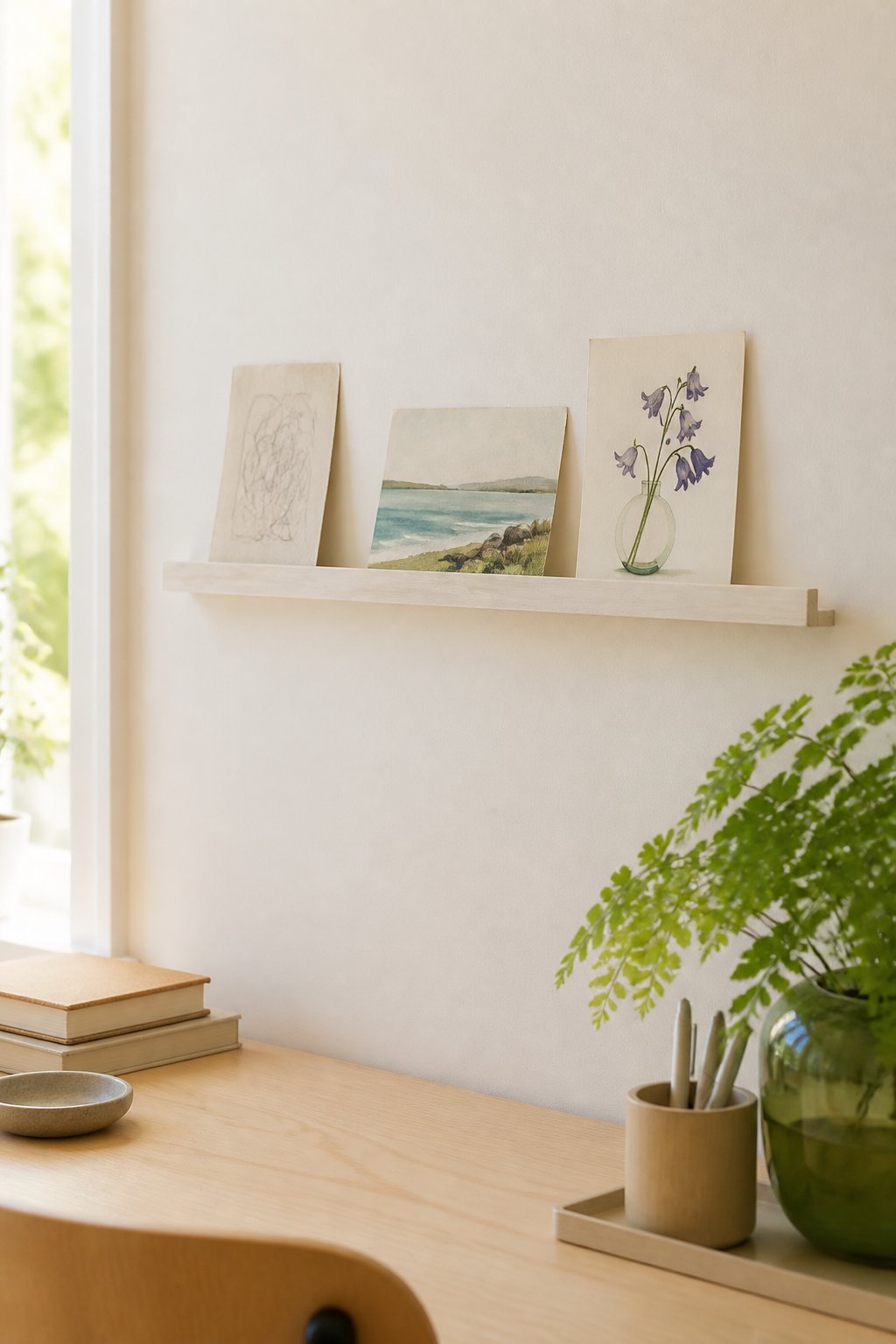
A narrow scrap-wood ledge gives a home office a place for postcards and small sketches you already own. Painted the same warm white as the wall, it feels understated, with the artwork supplying the personality.
Use a board about three inches deep with a slim front lip to catch frames. Anchor the ledge into two studs and keep heavy pottery off this shallow display.
18. Set Thrifted Stools Beside the Sofa
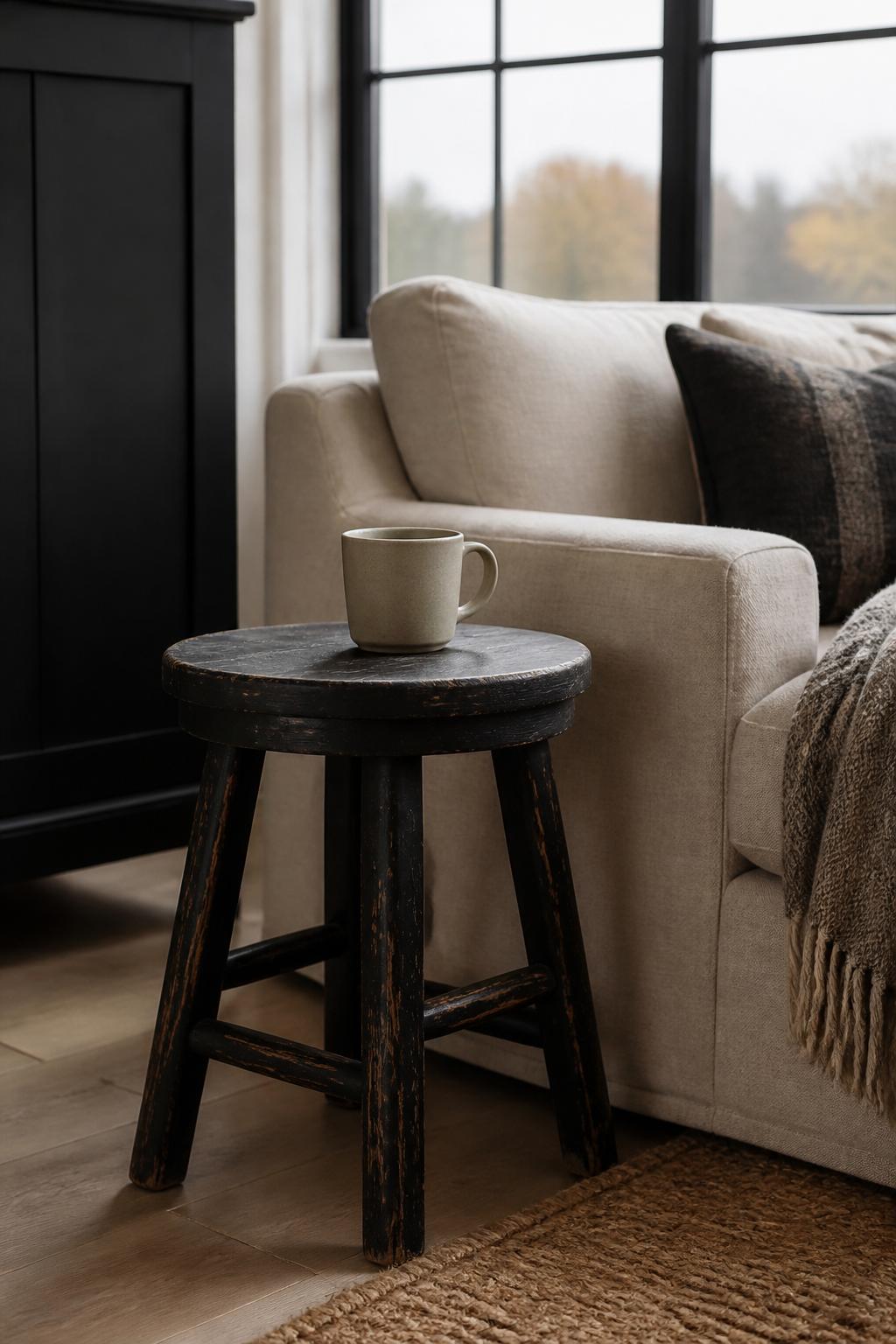
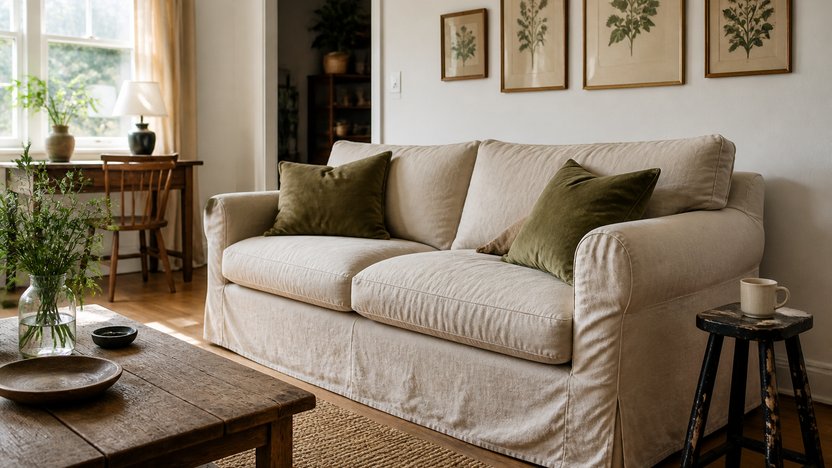
One sturdy secondhand wooden stool makes a compact side table with more character than a matching furniture set. Its worn black paint and round seat bring a farmhouse note beside a soft beige sofa.
Aim for a seat within two inches of your sofa arm height. Before bringing it home, press on opposite seat edges to spot wobbling joints that need repair.
19. Make a Runner From Remnant Fabric
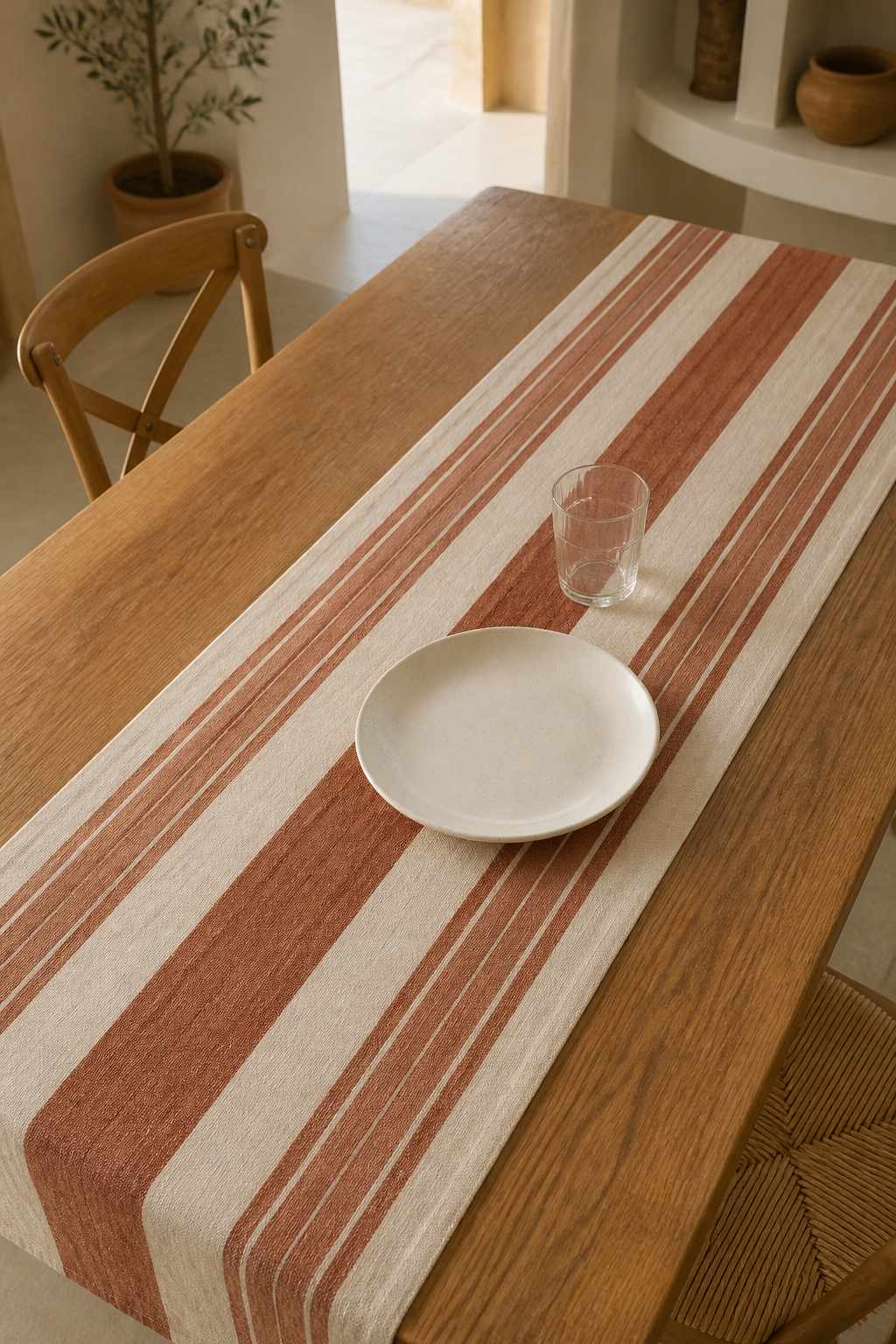
A remnant of rust-and-cream striped cotton stretched along the dining table gives everyday meals a little cafe charm. The narrow runner lets the wood show, and its slightly irregular stripes keep the setting casual.
Allow six to eight inches of overhang at each end. For a simple finish, turn every edge under twice and press before securing it with washable iron-on hem tape.